For HR directors, plant managers, and construction leads across Lithuania, Latvia, Poland, Greece, Hungary, and other EU markets, filling skilled and semi-skilled positions has become a persistent challenge. Local labor pools are shrinking, project timelines are under pressure, and recruitment cycles often stretch longer than expected.
This is where vietnam overseas manpower offers a practical, compliance-conscious alternative. Many employers consider Vietnamese workers for their discipline, adaptability, and willingness to learn when role expectations are clearly communicated. This guide provides a straightforward look at how to evaluate and engage with Vietnam as a talent source, focusing on real-world considerations and structured processes.
For EU employers comparing vietnam overseas manpower options, the goal should be clear: match the right worker profile with the right role, country, and documentation pathway.
EU Labor Shortages and Opportunities from Vietnam
Labor Market Pressures Across Target EU Countries
Across manufacturing hubs in Poland and Hungary, construction sites in Greece and Lithuania, and logistics centers in Latvia and Romania, employers report difficulties finding reliable local candidates. Demographic declines and an aging workforce have reduced labor force participation, while infrastructure and production targets continue to grow. This gap directly affects productivity and delivery schedules.
For broader EU labor-market context, employers can also review the European Labour Authority labour shortages report, which provides official insight into shortage and surplus occupations across Europe.
For many companies, vietnam overseas manpower has become a relevant option to bridge these gaps without lowering quality standards. Vietnamese workers are known for their technical aptitude and willingness to adapt to EU workplace norms. Employers have observed that vietnamese workers in europe often integrate faster than expected when given clear instructions and basic language support. The combination of practical vocational training in Vietnam and a strong sense of responsibility makes them a reliable addition to mixed-nationality teams.
Demographic Trends Driving Talent Demand
Eurostat population ageing data and national labor statistics show that several EU countries face long-term demographic pressure. In parallel, Eurostat job vacancy statistics help employers understand how hiring gaps continue to affect workforce planning across different sectors.
Retirement rates can exceed entry-level hiring in practical sectors such as metalworking, assembly, and general construction. Local vocational training outputs have not always kept pace with demand. As a result, employers are looking beyond traditional recruitment geographies.
Vietnam, with its young and increasingly skilled workforce, offers a relevant talent pipeline for selected roles. The country’s vocational education system emphasizes practical skills and safety awareness, which may reduce onboarding friction for EU companies when expectations are clearly communicated. For decision-makers evaluating talent sources, the demographic realities in target EU countries make vietnam overseas manpower a logical option to explore.
Key Industries Benefiting from Vietnamese Talent
Vietnamese workers have demonstrated strong performance across multiple EU industries. The following sectors have seen particularly positive results. For employers evaluating vietnam overseas manpower, industry fit should always come before candidate volume.
For employers comparing sourcing models, our offshore staffing Vietnam process explains how role intake, candidate screening, documentation coordination, and worker preparation can support clearer workforce planning.
Construction and Infrastructure Projects
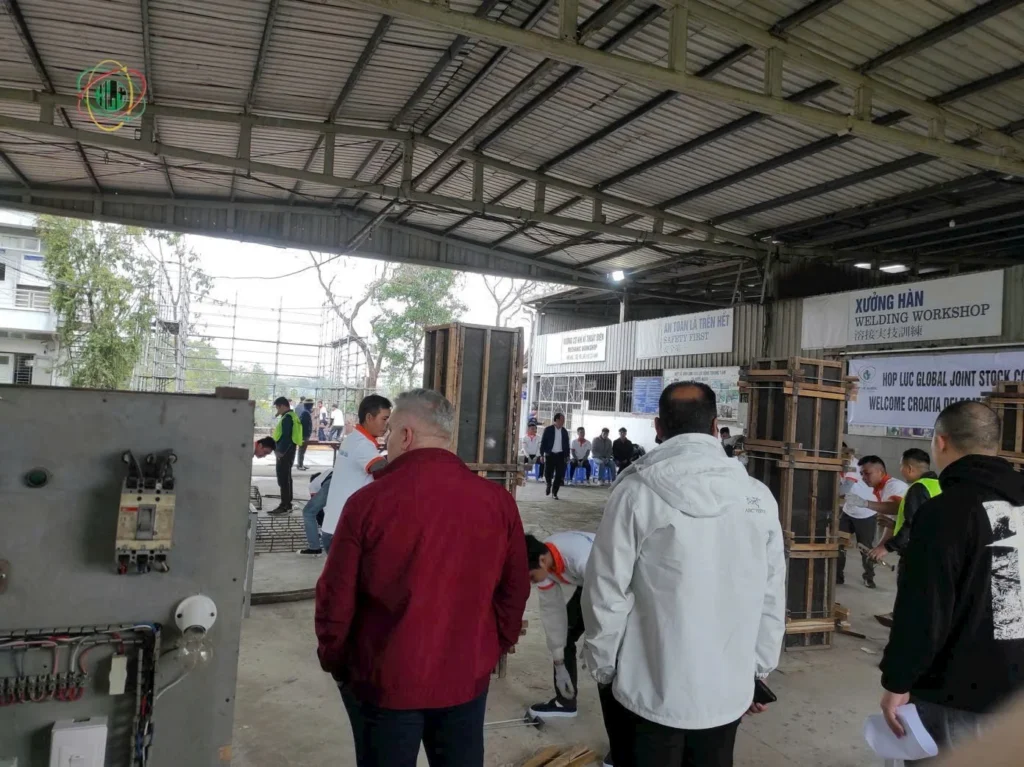
From formwork and steel fixing to finishing trades, vietnam overseas manpower supports large-scale construction timelines. Vietnamese crews are valued for their consistency, ability to follow safety protocols, and consistent attendance habits where expectations and worksite rules are clearly explained.
Whether working on residential developments, road infrastructure, or industrial buildings, these workers integrate well into mixed-nationality teams. Employers report that basic language instruction combined with visual work instructions yields rapid productivity.
In many cases, vietnam overseas manpower in construction has helped contractors meet tight deadlines that local labor shortages would otherwise jeopardize. The physical stamina and attention to detail of Vietnamese workers are particularly beneficial for repetitive tasks such as rebar placement, concrete finishing, and modular assembly.
Planning construction or infrastructure recruitment?
Share your role list, target country, and expected start date so Hop Luc Global JSC can review whether Vietnam is suitable for your workforce plan.
Manufacturing and Industrial Operations
Precision assembly, machine operation, quality control, and packaging are areas where Vietnamese workers excel. In automotive component plants, electronics assembly lines, and general metal fabrication, their attention to detail reduces error rates. Many have prior experience in export-oriented factories within Vietnam, which follow international quality and safety standards. This background shortens the learning curve when placed in EU manufacturing environments. For production managers facing high turnover or unfilled shifts, vietnam overseas manpower provides a pool of candidates who are accustomed to shift work and quality metrics. Vietnamese workers often demonstrate strong hand-eye coordination and patience for detailed inspections, making them suitable for industries where precision is critical.
Logistics and Supply Chain Support
Warehousing, order picking, inventory management, and basic forklift operations benefit from a reliable workforce. Vietnamese workers in logistics roles demonstrate punctuality and stamina, which are critical for meeting distribution deadlines. They adapt well to warehouse management systems and safety protocols. For logistics operators facing seasonal or sustained labor shortages, Vietnam represents a consistent and structured sourcing option. The manpower export from Vietnam model has evolved to include pre-departure training on common warehouse equipment and digital scanning tools. This reduces the need for extensive on-site training and allows workers to contribute quickly. Employers in e-fulfillment and third-party logistics have noted that Vietnamese workers can adapt well when they receive clear onboarding, workplace instructions, and time to adjust to the local work environment.
Vietnam Overseas Manpower Recruitment, Visa and Deployment Overview
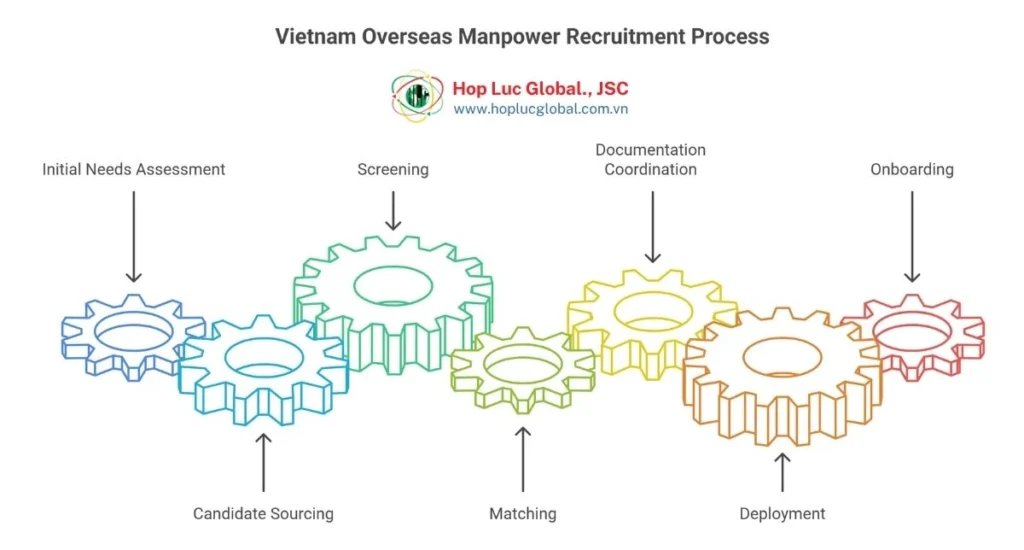
Understanding the end-to-end process helps employers plan effectively. While each case varies by destination country, the general steps follow a structured pattern.
Initial Needs Assessment and Matching
A qualified manpower export from Vietnam begins with a detailed job analysis. The provider collects role descriptions, required certifications, language expectations, and any specific cultural or technical requirements.
Based on this profile, candidate sourcing begins through Vietnam-based databases, vocational school networks, and prior applicant pools. Screening includes document verification, skills testing, and interviews—often with employer participation.
This matching phase aims to align worker capabilities with actual job demands. Employers should provide as much detail as possible about daily tasks, equipment used, safety protocols, and shift patterns.
The more precise the job profile, the higher the likelihood of finding suitable candidates. Some providers also offer video interviews or skills demonstrations to validate claims.
Employers that want a broader view of the full recruitment workflow can review the offshore staffing Vietnam process before preparing their role list and candidate requirements.
For a deeper look at documentation requirements, refer to our guide on offshore staffing Vietnam process and compliance-aware recruitment planning.
Documentation Coordination
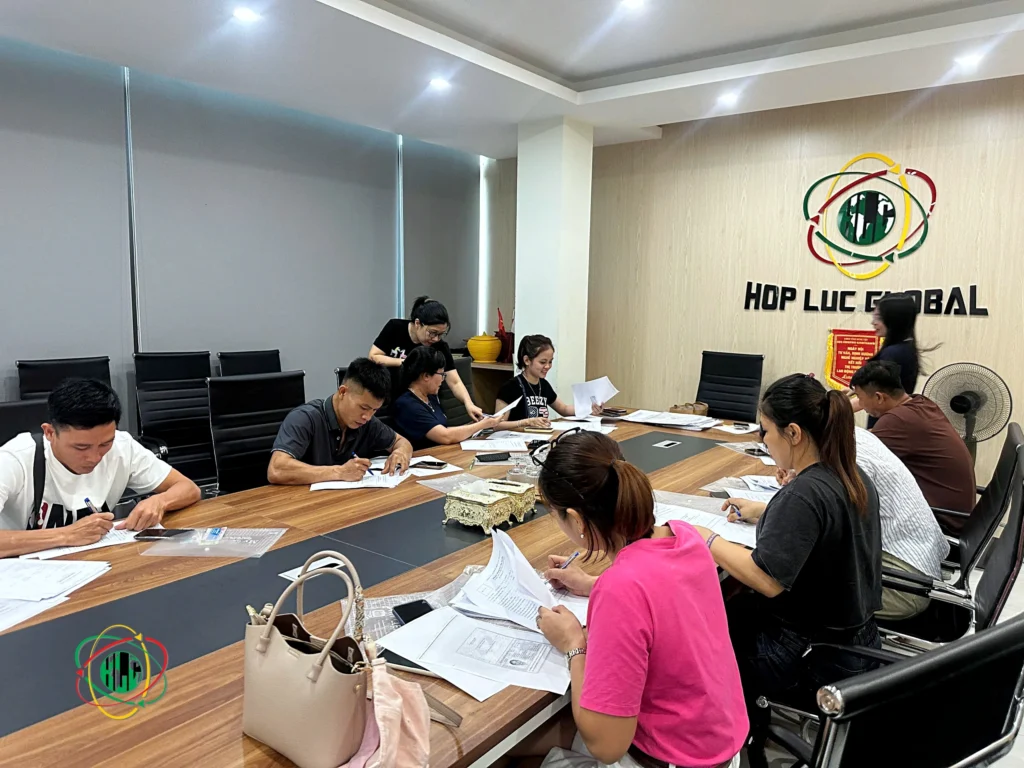
Once candidates are selected, the focus shifts to preparing employment contracts, visa applications, work permits, and medical clearances. Each EU country has its own documentation requirements, which the manpower provider must navigate.
Employers should expect to provide supporting business documents, such as proof of need for foreign labor and compliance with local wage rules. Timelines vary, but early preparation reduces delays. A responsible vietnam overseas manpower plan should treat documentation as part of workforce planning, not as a last-minute task. A transparent partner will outline each required step without promising fixed processing times.
Common documents include passport copies, educational certificates, vocational training records, criminal background checks, and health insurance confirmations. Working with a provider that has experience in your specific destination country can reduce administrative friction and help avoid common pitfalls. Additionally, employers should verify that all documents are authenticated and translated where required, as inconsistencies in paperwork are a frequent cause of delays in visa processing.
Want to review documentation steps early?
Send your headcount plan and target country. Our team can help outline the sourcing, screening, and documentation coordination steps to review.
Deployment and Onboarding Coordination
After visa and permit approvals, travel arrangements are made. Many providers coordinate arrival support, including airport pickup, temporary accommodation, and basic orientation. Onboarding at the worksite should include safety briefings, equipment training, and introductions to local supervisors. Clear communication channels between employer, worker, and provider during the first weeks help resolve small issues before they escalate. This phased approach supports long-term retention and performance. Some providers also offer a settling-in period during which workers receive guidance on local transport, banking, and emergency procedures. Employers who invest time in a structured orientation often see faster productivity gains and lower early-stage turnover.
Choosing a Trusted Manpower Partner
Not all agencies operate with the same level of professionalism. Selecting the right partner reduces risk and ensures smoother deployment.
The right vietnam overseas manpower partner should explain sourcing, screening, documentation, and employer-side responsibilities before recruitment begins.
Key Evaluation Criteria
Look for agencies with demonstrable experience serving EU employers. Ask about their candidate sourcing methods, background verification procedures, and language training support. A reliable partner will be transparent about their licensing status and any third-party accreditations. They should also provide clear fee structures without hidden charges.
Approved public references or verified operational proof points can be useful where available, especially in your industry. Employers should also assess whether the agency has a physical office in Vietnam and a dedicated team that understands EU labor expectations, documentation coordination, and cross-border communication.
For employers still comparing partner models, this guide on choosing a staffing agency for EU employers explains how structured recruitment support can help companies review sourcing, screening, and workforce planning more clearly.
Risk Reduction Factors
Effective communication is a major risk reducer. Does the agency assign a dedicated coordinator who speaks your language and understands EU labor norms? Do they provide regular updates during the recruitment and visa stages? Are there clear escalation paths for issues that arise after deployment? These operational details separate a professional partner from a transactional broker.
Additionally, a partner that conducts pre-departure cultural and legal orientation for workers helps prevent misunderstandings on-site. Risk reduction also involves verifying that the agency has a valid license from Vietnamese authorities—such as the license held by Hop Luc Global (67/LĐTBXH-GP, issued 2023-10-26)—and that they follow ethical recruitment practices. Employers should ask how worker-side costs and ethical recruitment practices are managed. Another key factor is contract clarity: ensure that employment terms, accommodation arrangements, and insurance coverage are explicitly stated in a language that both parties understand.
👉 Discuss your manpower requirements with a provider that prioritizes compliance and long-term fit.
Hop Luc Global’s EU-Focused Approach
Company Background
Hop Luc Global Joint Stock Company is a Vietnam-based manpower service provider operating under license number 67/LĐTBXH-GP (issued 2023-10-26).
The company focuses on supplying skilled and semi-skilled workers to EU markets including Lithuania, Latvia, Greece, Croatia, Finland, Estonia, Romania, Bulgaria, Poland, Hungary, and wider Schengen countries. Its team understands both Vietnamese labor regulations and the compliance expectations of European employers. The tax code is 0110103022. With an office located at Lot 01, TT6 – 2B, Thi Cam Street, Xuan Phuong Ward, Hanoi, Vietnam, Hop Luc Global maintains direct access to candidate networks across Vietnam’s key industrial regions. The company’s licensing and tax registration are publicly verifiable, providing an additional layer of trust for EU partners.
Service Alignment with Employer Needs
Rather than offering generic placement, Hop Luc Global emphasizes structured processes that align with specific project requirements. Services include candidate screening based on EU role profiles, documentation guidance, and pre-departure orientation. The company avoids overpromising on timelines or outcomes, instead focusing on transparent communication.
This is especially important for employers using vietnam overseas manpower for the first time. For employers exploring EU recruitment from Vietnam, Hop Luc Global provides a practical, compliance-aware pathway. Employers can also visit Hop Luc Global JSC to review Vietnam manpower supply support for European companies.
For employers comparing vietnam overseas manpower options, this structured approach helps turn a general hiring need into a clearer sourcing and documentation discussion.
Practical Considerations for Successful Integration
Bringing workers from Vietnam to an EU worksite involves more than logistics. Thoughtful integration planning improves retention and team cohesion.

Pre-Arrival Preparation
Share detailed job descriptions, shift schedules, safety rules, and housing arrangements before workers depart. If language barriers exist, provide a basic glossary of work-related terms. Consider arranging a video call between the incoming worker and their future supervisor. This builds familiarity and reduces first-day anxiety. Also confirm that all required tools, personal protective equipment, and onboarding materials are ready. Pre-arrival communication should also cover practical matters such as local transportation options, grocery shopping, and emergency contacts. Employers who provide a simple welcome package—including a translated site map and a list of key phrases—often see faster adjustment. The overseas vietnamese workforce integration experience is smoother when workers feel expected and prepared. A brief cultural orientation covering workplace norms, break etiquette, and communication styles can further ease the transition.
On-Site Onboarding Best Practices
On the first day, assign a buddy or mentor who speaks a common language or uses translation tools. Conduct a thorough safety walkthrough of the worksite. Clarify break policies, communication channels for questions, and emergency procedures. Regular check-ins during the first month help identify training gaps or personal concerns. When workers feel welcomed and supported, productivity rises and turnover falls.
The overseas vietnamese workforce integration experience improves significantly with structured onboarding. Consider scheduling weekly feedback sessions where workers can ask questions anonymously or through a translator. Also, ensure that accommodation meets basic standards—clean, safe, and reasonably close to the worksite. Small gestures, such as providing a local SIM card or a cultural orientation booklet, can make a meaningful difference in worker satisfaction and loyalty.
Frequently Asked Questions
What are the main benefits of vietnam overseas manpower for EU companies?
Vietnamese workers are known for reliability, a strong work ethic, and adaptability to new environments. They bring technical skills from Vietnam’s export-oriented industries and typically show low absenteeism. Structured compliance processes reduce legal risks for employers, making Vietnam a practical talent source. Employers also benefit from lower turnover compared to some other source countries.
Which industries commonly benefit from Vietnamese workers?
Construction, manufacturing (automotive, electronics, metal fabrication), and logistics (warehousing, distribution) are primary beneficiaries. Other sectors like food processing and hospitality also find value. Success depends on matching worker skills to role requirements and providing adequate onboarding. The key is aligning worker experience with specific job demands.
How does the recruitment process for vietnam overseas manpower typically work?
The process includes needs assessment, candidate sourcing and screening, documentation coordination (contracts, visas, work permits), and deployment with arrival support. Timelines vary by country and case. A professional partner will outline each step without promising fixed dates. Employers should plan for a reasonable lead time and stay engaged throughout.
What should employers consider when choosing a manpower agency?
Look for EU market experience, transparent documentation processes, clear fee structures, and reference checks. Verify licensing status and ask about cultural orientation for workers. A partner that communicates proactively and avoids overpromising is generally more reliable. Also check if the agency provides post-placement support channels.
How can companies prepare for successful worker integration?
Provide clear role expectations, safety training, and basic language support before arrival. Assign a buddy for the first weeks, conduct regular check-ins, and address concerns promptly. Structured onboarding reduces misunderstandings and improves retention. Investing in a simple welcome guide can pay off in faster productivity.
Are there important compliance factors to consider?
Each EU country has specific work permit, visa, and labor law requirements. Employers must verify these rules with local authorities or legal counsel. General compliance includes proper contracts, wage alignment, accommodation standards, and health insurance coverage. Non-compliance can lead to legal penalties and worker dissatisfaction, so thorough due diligence is essential.
Ready to Review Your Vietnam Overseas Manpower Plan?
Send your headcount plan to Hop Luc Global JSC and start a practical vietnam overseas manpower discussion for your skilled and semi-skilled roles. Share your role types, estimated worker quantity, destination country, and target start window. Our team can review your workforce needs and suggest a structured sourcing roadmap from Vietnam.
Contact Hop Luc Global:
Email: contact@hoplucglobal.com
Phone: (+84)24.6328.4768
Office: Lot 01, TT6 – 2B, Thi Cam Street, Xuan Phuong Ward, Hanoi, Vietnam
Tax code: 0110103022 | License: 67/LĐTBXH-GP (2023-10-26)
This guide is for informational purposes. Employers should always verify country-specific immigration and labor regulations with local authorities, employer-side legal advisers, or official European resources such as the European Labour Authority before initiating recruitment.