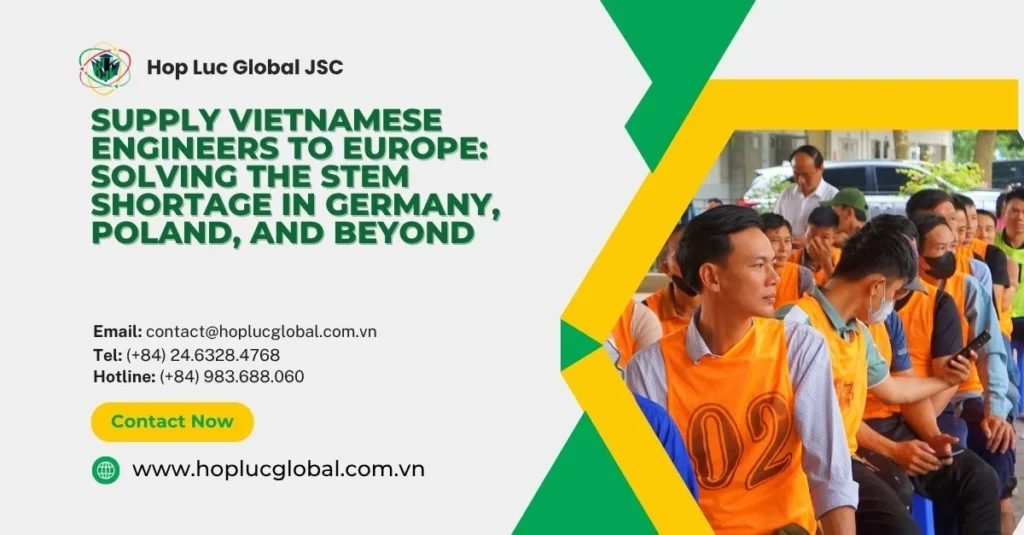
European employers across manufacturing, construction, and engineering sectors are increasingly evaluating overseas workforce strategies to address persistent labour shortages and fluctuating production demands. For HR directors, plant managers, and recruitment partners, the challenge lies not only in finding skilled workers but also in navigating complex cross-border recruitment processes. This is where vietnam skilled manpower emerges as a practical consideration. Vietnam offers a young, trained workforce with industrial experience, and its manpower suppliers are developing structured recruitment discussions that align with employer timelines.
However, successful engagement requires realistic expectations, thorough supplier evaluation, and compliance awareness regarding destination-country requirements. In this article, we explore how EU employers can approach workforce planning with Vietnam as a source, evaluate potential partners, and initiate practical recruitment discussions.
Why EU Employers Are Reviewing Overseas Workforce Strategies
Labour Shortages and Manufacturing Demand in Key European Markets
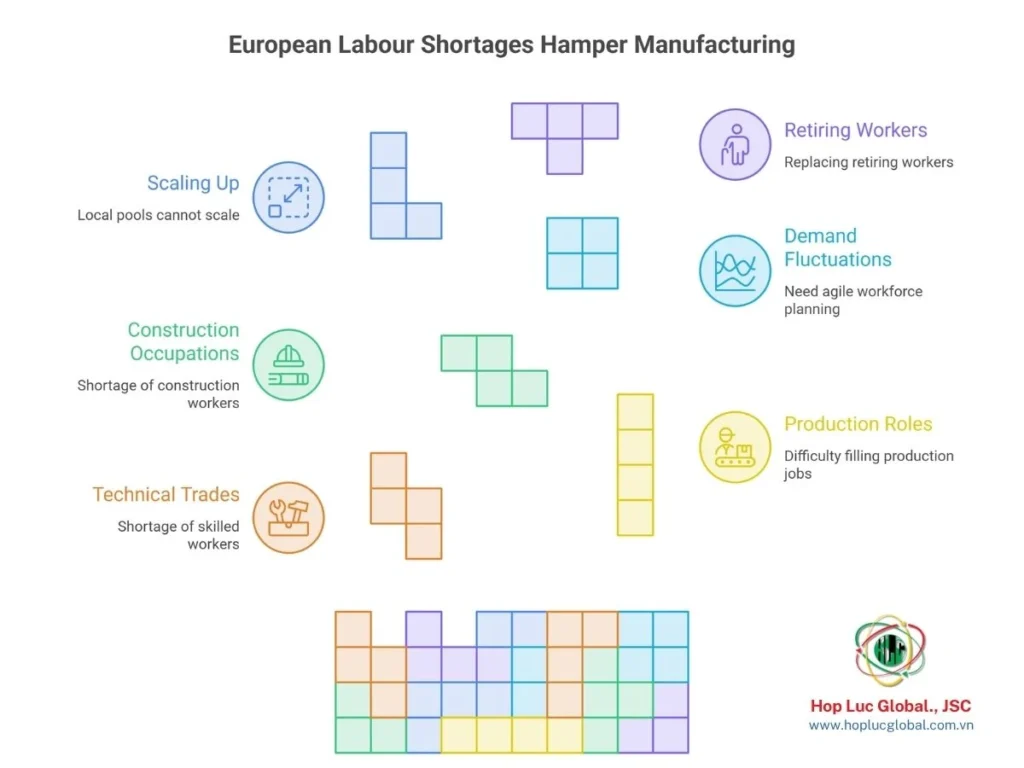
Many EU member states continue to experience significant skills gaps in technical trades, production roles, and construction occupations. Despite high overall employment rates, specific sectors report difficulty filling vacancies with domestic candidates. At the same time, production schedules and project milestones are subject to demand fluctuations that require agile workforce planning. Employers often find that local labour pools cannot scale up quickly enough to meet peak periods or replace retiring workers. Consequently, international recruitment has moved from a peripheral option to a central strategic consideration. For companies with long-term investment plans, securing a reliable talent pipeline is essential to maintain competitiveness and operational continuity.
The Shift Toward Cross‑Border Talent Sourcing
Improved digital communication, better transport connectivity, and growing familiarity with cross-border employment arrangements have made overseas sourcing more accessible. Employers are no longer limited to national borders when searching for skilled labour. However, the shift also introduces new complexities: regulatory differences, cultural adaptation, and documentation procedures vary significantly across destinations. As a result, many companies seek partners who can guide them through these challenges while ensuring compliance with both home and host country rules. Risk management and transparency have become non‑negotiable elements of any international staffing partnership. Within this context, vietnam skilled manpower is increasingly recognised as a viable sourcing channel, provided that employers and suppliers engage in open, realistic dialogue from the outset.
What Makes Vietnam Skilled Manpower Relevant for European Employers
Vietnam’s Workforce Profile and Industrial Experience
Vietnam has a demographic advantage with a large, youthful population and a strong emphasis on vocational training. Many Vietnamese workers have gained hands-on experience in manufacturing, electronics, assembly, and construction through domestic employment or previous overseas assignments. Technical schools and industrial training centres across the country produce graduates with practical skills that align with many European job descriptions. While labour costs are competitive, the primary value lies in the availability of disciplined, trainable individuals who demonstrate strong work ethics. For European employers reviewing vietnam skilled manpower, the country offers a depth of talent that can support both short-term projects and long-term workforce strategies.
Alignment with European Employer Requirements
European workplaces typically demand high standards of safety, quality, and reliability. Vietnamese workers often receive basic safety training and are accustomed to structured production environments. Moreover, many recruitment suppliers offer additional preparation programmes that include language basics, cultural orientation, and technical upskilling tailored to specific employer needs. This alignment does not happen automatically; it requires careful coordination between the employer, the supplier, and the workers themselves. However, the willingness of Vietnamese workers to learn and adapt makes them attractive candidates for roles that require precision and consistency. Employers who invest time in defining their requirements clearly are more likely to find suitable matches within the vietnam skilled manpower pool.
Considerations for Long‑Term Workforce Planning
Effective workforce planning extends beyond immediate vacancy filling. It involves forecasting headcount needs, skill mixes, and mobilisation schedules that align with business cycles. Suppliers that provide transparent information about worker availability, training durations, and preparation timelines enable employers to integrate overseas recruitment into their overall human capital strategy. Vietnam-based agencies often specialise in facilitating such discussions, offering preliminary assessments of candidate availability and potential lead times. While exact dates cannot be guaranteed, structured conversations about expected timelines help both parties set realistic expectations. Incorporating vietnam skilled manpower into a broader workforce plan requires ongoing communication and a willingness to adapt as circumstances evolve.
Occupations and Workforce Profiles Commonly Discussed in Manufacturing Recruitment
Technical and Production Roles
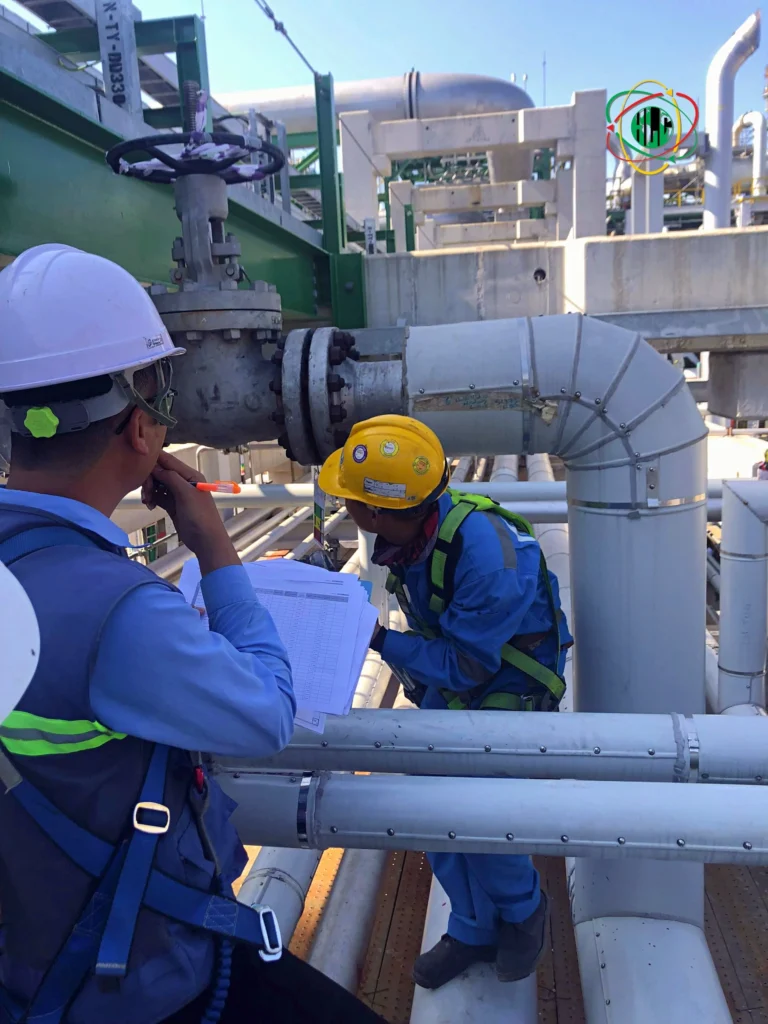
In manufacturing settings, employers frequently seek workers with skills in welding, machining, assembly, and quality control. Maintenance technicians and equipment operators are also high-demand categories. These roles often require specific certifications or verifiable experience, which suppliers must confirm through documentation and practical assessments. European employers typically specify the level of proficiency needed, and recruitment discussions centre on whether available candidates meet those criteria. While vietnam skilled manpower includes many individuals with these technical backgrounds, it is essential to verify each worker’s qualifications against the employer’s unique standards. The selection process may involve interviews, practical tests, and reference checks to ensure a good fit.
Construction and Infrastructure Positions
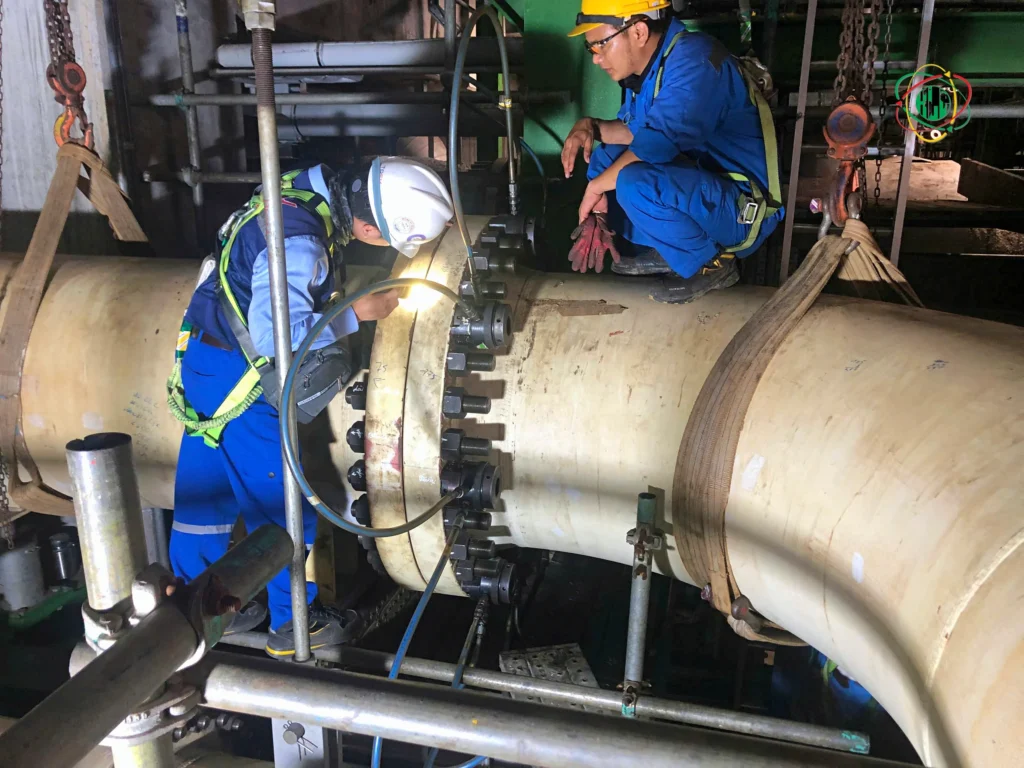
Construction projects, whether residential, commercial, or infrastructure, require a range of trades, including carpenters, steel fixers, scaffolders, and heavy machine operators. These positions demand physical stamina, safety awareness, and the ability to work in teams under tight deadlines. Recruitment for construction is often project‑based, meaning that mobilisation schedules must align precisely with site readiness. Employers evaluate suppliers on their capacity to deliver workers with the right mix of skills and experience for the specific tasks at hand. Vietnam skilled manpower has been deployed in various construction contexts, demonstrating adaptability and reliability. However, each project’s unique requirements necessitate careful planning and coordination between the employer and the supplier.
Adaptability and Cross‑Skilling
One of the strengths of Vietnamese workers is their adaptability. Many have experience in multiple roles and are open to learning new techniques or operating different machinery. This flexibility can be a significant advantage for employers facing changing production lines or diverse project scopes. Suppliers often incorporate cross‑skilling into their preparation programmes, enabling workers to perform more than one function. This not only increases the utility of each worker but also provides a buffer against skill shortages in specific areas. When evaluating vietnam skilled manpower, employers should consider not only current skill sets but also the potential for workers to acquire additional competencies through training and on‑the‑job experience.
How to Evaluate a Vietnam Manpower Supply Partner
Key Supplier Evaluation Criteria
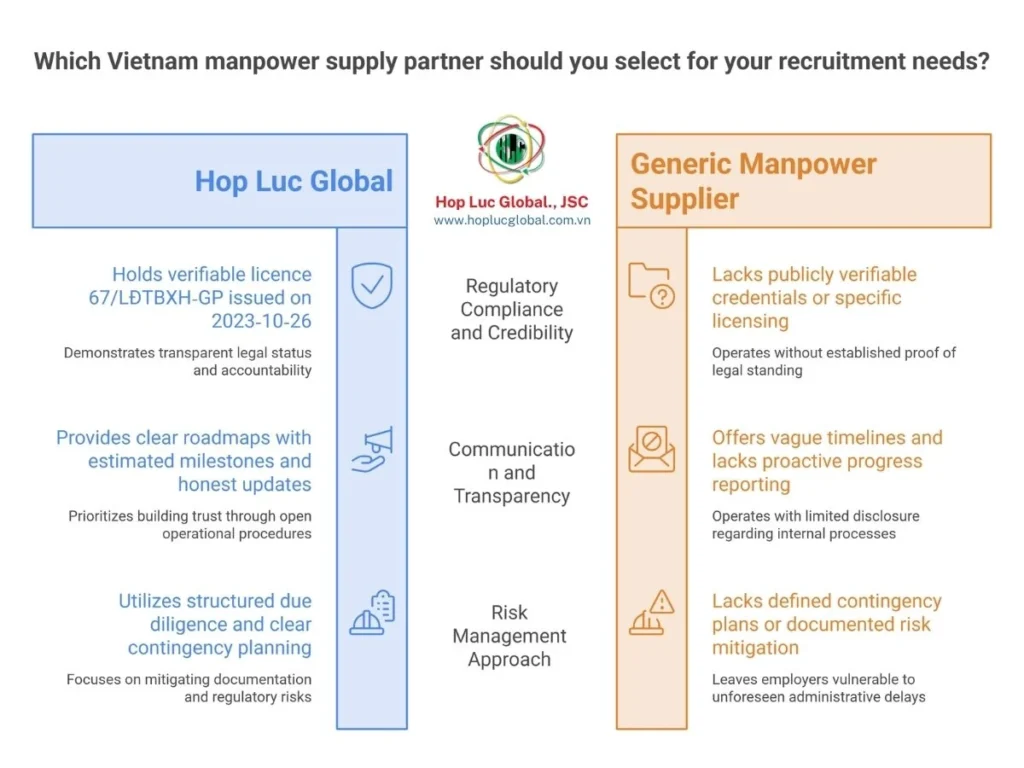
Choosing the right partner is critical to a successful overseas recruitment outcome. Employers should start by verifying the supplier’s legal status, including its business registration and any required licences. For instance, Hop Luc Global holds licence 67/LĐTBXH‑GP issued on 2023‑10‑26, which is a publicly verifiable credential. Beyond licences, evaluate the supplier’s recruitment processes: how they source, screen, and train candidates; how they handle documentation; and how they communicate with both workers and employers.
Transparent suppliers will readily share their procedures, timelines, and cost structures. They will also explain how they manage compliance with both Vietnamese regulations and destination‑country requirements. A systematic evaluation using a checklist can help compare multiple suppliers objectively and reduce the risk of unpleasant surprises later.
Understanding Recruitment Timelines and Mobilisation
Every recruitment cycle involves several stages: candidate sourcing, selection, training, documentation preparation, and submission of visa and work permit applications. Each stage has its own duration, which can vary greatly depending on the destination country’s administrative processes. Employers should anticipate that these steps are not instantaneous and that external factors, such as changes in immigration policies or peak processing periods, can affect overall timelines. A competent supplier will provide a realistic overview of these stages without promising fixed deadlines. Instead, they will offer a roadmap with estimated milestones and regular updates. When planning with vietnam skilled manpower, it is wise to build contingency time into project schedules to account for potential delays.
Risk Management and Due Diligence
Overseas recruitment carries inherent risks: documentation errors, regulatory changes, worker withdrawal, or even geopolitical events. Employers must conduct thorough due diligence to identify and mitigate these risks. This includes requesting references from previous clients (without naming specific companies), reviewing case studies of similar placements, and understanding the supplier’s contingency plans. Clear contracts that outline responsibilities, payment terms, and handling of unforeseen circumstances are essential. Regular communication and periodic progress reviews help both parties stay aligned. While risks cannot be eliminated entirely, a structured approach to supplier assessment and risk management significantly reduces uncertainty. Employers who prioritise these activities are better positioned to navigate the complexities of engaging vietnam skilled manpower.
Transparency and Communication as Trust‑Builders
Transparency is the cornerstone of a successful partnership. Suppliers should openly share their company background, contact details, operational procedures, and any relevant certifications. They should also be upfront about what they can and cannot control. For example, they cannot guarantee visa approvals, but they can ensure that all documentation is correct and submitted on time. Regular, honest communication about progress, challenges, and next steps builds trust and reduces anxiety for employers. Early discussions about role requirements, headcount estimates, and target mobilisation periods lay a solid foundation for collaboration. Employers are encouraged to review our company background before evaluating long‑term cooperation opportunities – a step that fosters informed decision‑making and mutual confidence.
Documentation Coordination and Compliance‑Aware Recruitment Communication
Key Documentation Requirements
Recruiting workers from Vietnam involves a substantial documentation component. Typical requirements include employment contracts, proof of qualifications, work permits, visas, and often medical certificates. Each document may need to be notarised, legalised, and translated into the language of the destination country. The specific list and format vary by country, so it is crucial to consult official sources for the most current information.
Employers and suppliers must coordinate closely to ensure all paperwork is complete, accurate, and submitted within required windows. Mistakes or omissions can lead to delays or rejections, underscoring the importance of meticulous attention to detail. A reliable supplier will have established procedures for managing these tasks and will keep the employer informed at each step of the documentation journey.
Compliance‑Aware Recruitment Communication
Compliance is not a one‑time check but an ongoing commitment. Throughout the recruitment process, both parties should maintain a dialogue that is realistic about legal requirements and administrative hurdles. Avoid making promises about outcomes that are outside the supplier’s control; instead, focus on process milestones and the actions being taken to meet them.
When regulations change – and they often do – the supplier should promptly inform the employer and propose adjustments to the plan. This compliance‑aware approach not only reduces legal risks but also builds credibility. Employers should expect their vietnam skilled manpower partner to be well‑versed in the latest rules and to proactively share relevant updates. Ultimately, successful recruitment depends on both sides working together within the boundaries of applicable laws and policies.
Preparing Workers for Destination‑Country Requirements
Before departure, workers require preparation that goes beyond technical skills. Language training, cultural orientation, and an understanding of their rights and responsibilities in the host country are vital. Many suppliers offer pre‑departure courses that cover these topics, helping workers integrate more smoothly and perform effectively. Employers may also specify additional safety or procedural training to match their workplace standards. While preparation does not guarantee success, it significantly enhances the likelihood of a positive outcome for both the worker and the employer.
Discussions about vietnam skilled manpower should include a clear outline of the preparation components and the expected duration. This clarity helps employers plan for the worker’s arrival and ensures that they are ready to support the integration process.
How Hop Luc Global Supports Structured Recruitment Discussions
About Hop Luc Global – A Verified Vietnam Manpower Supplier
Hop Luc Global Joint Stock Company is a Vietnam-based manpower supply agency operating under licence 67/LĐTBXH‑GP, issued on 2023‑10‑26. The company is registered at Lot 01, TT6 – 2B, Thi Cam Street, Xuan Phuong Ward, Hanoi, Vietnam. Its verified contact details include email contact@hoplucglobal.com and telephone (+84)24.6328.4768.
Hop Luc Global serves European employers and recruitment partners across multiple markets, including Lithuania, Latvia, Greece, Croatia, Finland, Estonia, Romania, Bulgaria, Poland, Hungary, and wider Schengen countries. The agency is committed to transparent communication and compliance‑aware practices, ensuring that all recruitment activities are conducted within legal frameworks. By sharing its verified company information openly, Hop Luc Global enables employers to conduct thorough due diligence and make informed choices about engaging vietnam skilled manpower services.
Structured Recruitment Discussions – What to Expect
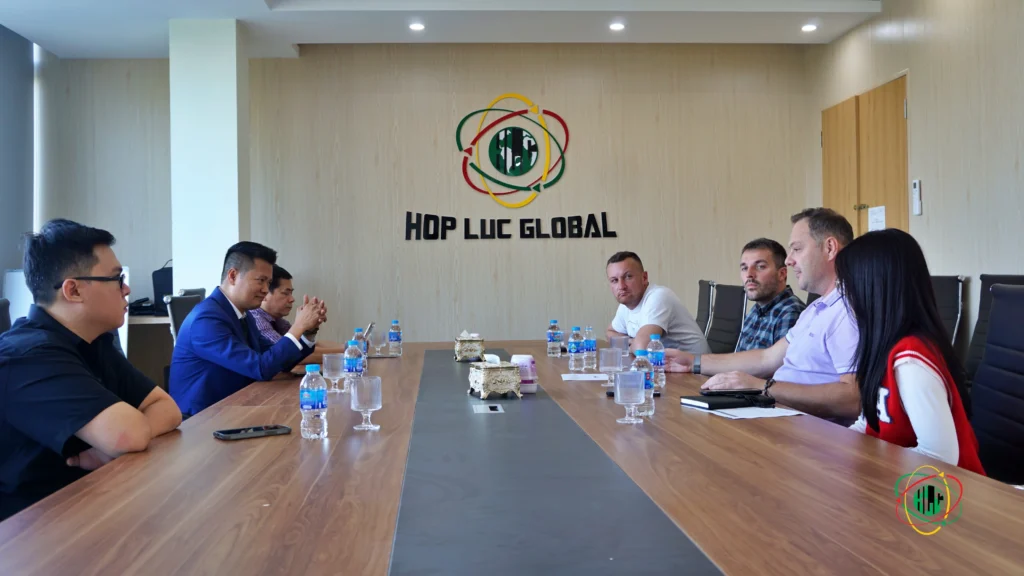
When employers reach out to Hop Luc Global, they can expect a structured conversation focused on practical workforce planning. The discussion typically covers role specifications, required skill levels, headcount estimates, and target mobilisation periods. The team provides clear information about recruitment processes, documentation steps, and compliance considerations, all while avoiding unrealistic promises. The goal is to align expectations and develop a shared understanding of what is feasible given current conditions.
Employers are encouraged to ask questions and raise concerns, as transparency is a two‑way street. This collaborative approach ensures that both parties are working from the same facts and can adapt as the situation evolves. Hop Luc Global’s emphasis on structured discussions reflects its dedication to supporting long‑term, sustainable employment relationships.
Next Steps: Initiate a Workforce Planning Conversation
Employers interested in exploring vietnam skilled manpower are invited to share their role lists and desired start dates. The Hop Luc Global team will then provide a tailored assessment of feasibility, including likely preparation timelines and documentation requirements. This initial conversation is without obligation and serves as a foundation for further planning. To get started, simply reach out via the Contact page or use the direct contact details provided. By engaging early, employers can integrate overseas recruitment into their broader workforce strategy and reduce the risk of delays. The team is ready to assist with practical guidance and to facilitate discussions that move from consideration to action.
Frequently Asked Questions About Vietnam Skilled Manpower
What types of skilled workers can EU employers source from Vietnam?
Vietnam provides workers in manufacturing (welding, machining, assembly), construction (carpentry, steel fixing), and technical roles, with adaptability for various production environments. The exact availability depends on current demand and the employer’s specific criteria.
How do I evaluate a Vietnam manpower supply partner?
Check legal status, licence, transparency, and communication. Request clear process descriptions and realistic timelines without guarantees. Verify that the supplier shares its company background and operational procedures openly.
What are the main documentation steps for recruiting workers from Vietnam?
Work permits, visas, employment contracts, and qualification proofs must be prepared, notarised, and legalised according to destination‑country requirements. Employers should coordinate closely with the supplier to ensure accuracy and timeliness.
Can Hop Luc Global guarantee worker deployment within a specific timeline?
No; timelines vary by country and case. Hop Luc Global provides realistic planning and coordinates documentation, but outcomes depend on authority approvals and external factors. Employers are advised to build contingency into their schedules.
What is the licence number of Hop Luc Global?
67/LĐTBXH‑GP issued on 2023‑10‑26, confirming its legal operation as a manpower supplier in Vietnam. This licence is a publicly verifiable credential.
How should employers start workforce planning with Hop Luc Global?
Employers can share role lists, headcount estimates, and target mobilisation dates via contact@hoplucglobal.com or phone (+84)24.6328.4768. The team will then arrange a structured discussion to explore feasibility and next steps.
Are there risks in overseas recruitment that employers should consider?
Yes, including documentation delays, regulatory changes, and availability fluctuations. Mitigation includes early planning, clear contracts, and regular communication with a transparent supplier. While risks cannot be eliminated, a structured approach reduces uncertainty.
Ready to Start Your Workforce Planning?
Share your role list and target start date to discuss practical workforce planning options. Our team is here to provide transparent, compliance‑aware guidance tailored to your recruitment needs. Contact us today:
Start Your Workforce Planning Conversation
Share your role list and target start date. Contact Hop Luc Global to discuss your recruitment needs, worker categories, documentation, and expected deployment timeline.
contact@hoplucglobal.com | (+84)24.6328.4768
https://hoplucglobal.com.vn/ | Office Location
We look forward to supporting your workforce planning journey with reliable information and practical partnership.