European industrial employers are increasingly exploring how to supply Vietnamese engineers to Europe as persistent STEM talent shortages challenge production capacity and project delivery across manufacturing, infrastructure, and automation. For HR directors, plant managers, and COOs in Germany, Poland, and wider Schengen markets, a structured international recruitment partnership is becoming a practical workforce planning lever. Hop Luc Global provides international manpower recruitment services that help employers evaluate Vietnam as one sourcing channel among several, with transparent processes and documentation coordination built for long-term planning.
Current labour market data published by Eurostat shows that employers should regularly review engineering workforce trends before making long-term international recruitment decisions. Using up-to-date labour market information helps organisations align workforce planning with actual hiring demand rather than short-term assumptions.
Why European Employers Need to Supply Vietnamese Engineers to Europe
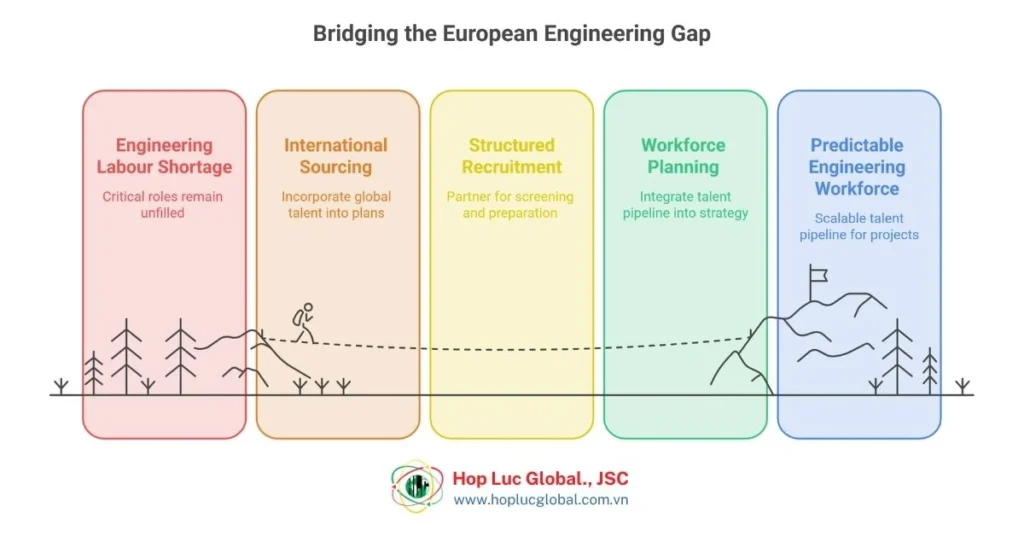
Across the European Union, employers in manufacturing, construction, logistics, and energy sectors face a tightening engineering labour market. Long-term demographic trends and rapid technological change continue to widen the gap between available local engineering professionals and actual project requirements. The conversation has shifted from whether to consider international talent to how to build a reliable, repeatable workforce pipeline.
Many industrial organisations now evaluate how to supply Vietnamese engineers to Europe as part of their long-term engineering workforce strategy rather than as an emergency recruitment measure.
STEM shortages continue to affect industrial growth
According to Eurostat and other public labour market observations, engineering occupations remain among the hardest to fill in many EU member states. Vacancies in mechanical, electrical, and automation roles can delay factory expansions, stall infrastructure upgrades, and increase overtime costs. When critical roles stay open for months, production continuity suffers. Rather than competing only for the same domestic candidate pool, forward-thinking employers are incorporating international sourcing into their annual workforce plans. A measured approach to supply Vietnamese engineers to Europe offers a way to supplement local hiring without relying on short-term fixes. The goal is not to replace local recruitment but to add a predictable supplementary channel that can scale with project pipelines.
Why international engineering recruitment is being considered
Employers with experience in cross-border recruitment know that success depends on process, not just candidate availability. A structured partner can help human resources teams navigate the additional layers of candidate screening, role-specific preparation, and documentation coordination that international hiring requires. Vietnam, with its young technical workforce and expanding engineering education system, is increasingly part of the international talent conversation. When integrated into a multi-country sourcing strategy, Vietnamese engineering talent EU-focused companies can consider it alongside other markets, provided the recruitment partner offers clear communication and verifiable workflows. The decision to look beyond borders should be driven by workforce planning logic, not emergency filling, and that mindset makes all the difference in long-term outcomes.
Why Vietnam Is Considered for Engineering Recruitment
Vietnam has invested heavily in technical and vocational education over the past two decades, producing a growing number of engineers in disciplines relevant to European industry. This does not mean unlimited supply, but it does mean that employers who start early planning can evaluate realistic candidate pipelines. The country’s demographic profile, with a large population under 35, provides a workforce pool that many ageing economies find attractive for mid- to long-term roles.
Engineering disciplines commonly sourced from Vietnam
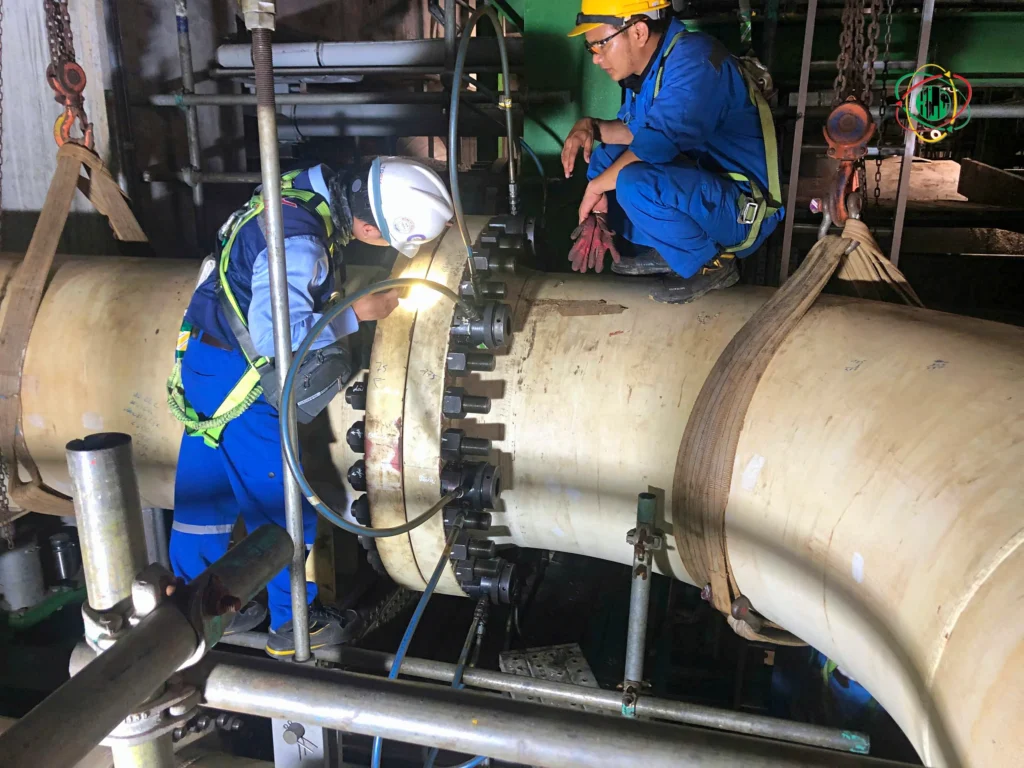
European employers and recruitment agencies most often look to Vietnam for mechanical engineers Vietnam export-ready candidates, electrical engineers Vietnam Europe project-focused professionals, and automation engineers Vietnam trained in PLC programming, robotics, and industrial control systems. Additionally, industrial maintenance technicians, welding engineers, and manufacturing process engineers appear frequently in job briefs. These disciplines align with the needs of automotive suppliers, metal fabrication plants, food processing facilities, and logistics centres. While not every specialism may be immediately available, starting a requirements discussion early helps recruitment partners map existing candidate pools and advise on realistic timelines.
Companies planning to supply Vietnamese engineers to Europe should define role requirements early so recruitment partners can identify suitable candidate pipelines and realistic sourcing schedules.
What employers should evaluate beyond technical qualifications
Technical diplomas and work experience are the starting point, but international recruitment demands a broader evaluation framework. Employers should consider how a partner assesses communication readiness—not language certification alone but practical workplace English or other relevant languages, and cultural adaptability.
Role-based preparation, where candidates receive targeted orientation on the specific equipment, safety protocols, and quality standards of the hiring company, dramatically reduces onboarding friction.
Documentation readiness is equally critical; candidates need support compiling employment records, education verification, and identity documents that meet destination-country standards. A recruitment partner that ignores these soft factors may deliver résumés quickly but struggle to support successful placement and retention. When you plan to supply Vietnamese engineers to Europe, the difference between a transaction and a sustainable pipeline often lies in these preparation layers.
How to Evaluate a Vietnam Engineering Recruitment Partner
Before selecting an international recruitment partner, employers are encouraged to review employer guidance published by EURES . These resources provide practical information on labour mobility, employer responsibilities, and workforce planning considerations across European labour markets.
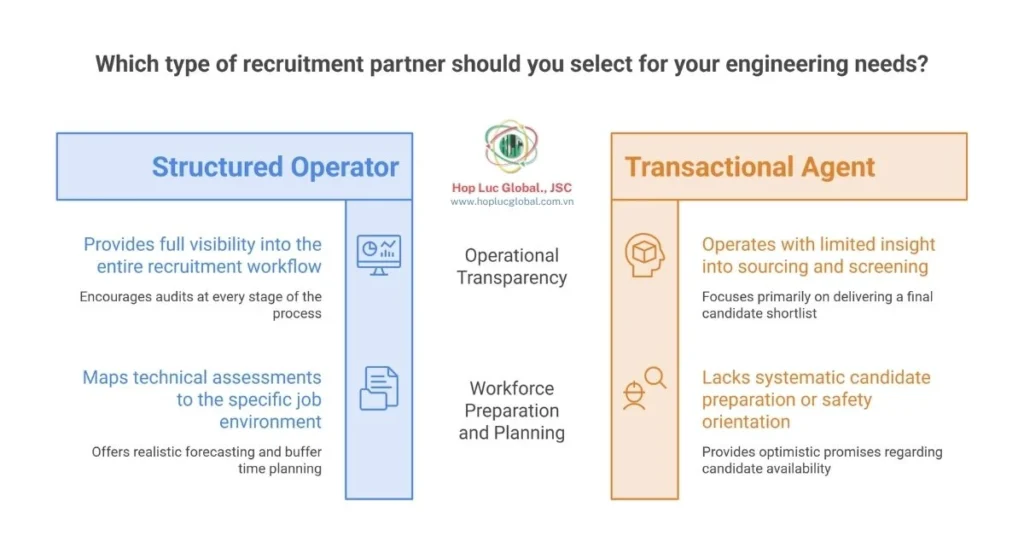
Choosing the right international recruitment partner is the most consequential decision an employer will make in this process. A methodical evaluation that goes beyond pricing comparisons protects project timelines and recruitment budgets. The following criteria help separate structured operators from transactional agents.
Assess recruitment transparency and communication
A trustworthy partner openly shares their recruitment workflow, from candidate sourcing and initial screening to employer interview coordination and final selection. Employers should expect regular progress reports, clear timelines, and a single point of contact who understands both the technical requirements and the administrative steps. Ask to see sample communication templates and check how the partner handles changes in job specifications. Transparent partners encourage employers to audit each stage, not just the final candidate shortlist. This openness is a practical safeguard against delays caused by misaligned expectations. In the STEM recruitment Vietnam context, process visibility also helps internal stakeholders—engineering managers, HR, and legal teams—stay aligned.
A transparent recruitment process is one of the most important foundations when employers intend to supply Vietnamese engineers to Europe for manufacturing, automation, or infrastructure projects.
Review workforce preparation, documentation and planning
Beyond sourcing, the partner should demonstrate a systematic approach to candidate preparation. This includes technical assessments mapped to the employer’s real job environment, safety and compliance orientation, and structured documentation coordination. Destination-country work authorization requirements vary, so the partner’s role is to ensure that each candidate’s file is complete and correctly formatted for authority review, while the employer handles the official application side. Reliable partners also provide realistic workforce planning, advising on lead times for candidate availability based on current market conditions, not optimistic promises. Risk reduction comes from honest forecasting: how many candidates can reasonably be presented per quarter, what documentation hurdles typically arise, and how to build buffer time into project schedules. Employers who treat recruitment as a phased programme rather than a one-off order tend to achieve better outcomes.
Building a Practical Engineering Workforce Strategy
Engineering leaders know that workforce gaps are easier to manage when they are anticipated six to twelve months in advance. A practical strategy connects headcount projections, role specifications, and recruitment partner engagement into a single timeline that the entire organisation can follow.
Questions HR teams should ask before starting recruitment
Before contacting external partners, internal alignment on a few foundational points saves weeks of back-and-forth. What are the exact engineering roles required, with the core technical competencies and any preferred industry background? What is the planned headcount per role over the next 12–18 months? When do the first hires need to be on-site, and what is the latest acceptable start date? Which internal stakeholders—engineering managers, plant directors, legal counsel—must approve the role profiles and recruitment process? Having these answers documented turns a vague “we need engineers” into a actionable brief that any serious recruitment partner can work with. This preparatory step also reveals whether the employer is ready to support an international hire with the necessary onboarding, accommodation, and compliance procedures.
How structured recruitment supports workforce planning
A structured approach connects early planning with predictable execution. Once the role briefs are confirmed, the recruitment partner can map the available candidate pool, propose realistic presentation schedules, and begin documentation coordination well before offer letters are issued. This front-loading of administrative work reduces the risk of last-minute delays related to incomplete employment records or authority processing. Regular milestone reviews—candidate pipeline updates, documentation status, interview scheduling—keep both sides accountable. Employers who engage a partner months ahead of peak season, rather than weeks, typically experience smoother deployment and lower rush costs. The discipline of workforce planning also strengthens the business case for long-term partnership, as repeatable processes yield better data for future hiring cycles.
For broader workforce planning practices, employers may also consult publications from the International Labour Organization (ILO) , which regularly publishes guidance on employment trends, workforce development, and sustainable labour practices relevant to international recruitment.
Why Employers Work with a Structured Recruitment Partner
After evaluating multiple sourcing options, European employers consistently return to the same conclusion: a structured partner reduces the administrative burden, lowers the risk of mismatched hires, and provides the forecasting visibility that production planning requires. The relationship moves beyond a transactional vendor model to a collaborative workforce partnership.
What employers should expect from a recruitment partner
A professional partner provides transparent communication at every stage, from initial market feasibility analysis through post-arrival support coordination. They should invest time in understanding the employer’s specific production environment, equipment, and quality systems so that candidate preparation is genuinely role-relevant. Documentation coordination is not a one-time event but an ongoing process managed against a checklist shared with the employer. Workforce planning becomes a joint activity: the partner advises on realistic timelines, flags potential bottlenecks early, and updates headcount projections quarterly. Employers who have worked with such partners describe the experience as one of extended HR capability rather than an outsourced search function. This is the standard that should be expected when engaging a partner to supply Vietnamese engineers to Europe.
Next steps for engineering workforce planning
The first practical step is to compile the role specifications and target headcount numbers that were discussed internally. Next, share those requirements with a potential recruitment partner to begin a workforce planning discussion, not a price negotiation. Early conversations about project timelines, candidate expectations, and documentation readiness often reveal valuable insights that shape the internal business case. Once the partner demonstrates a clear understanding of your needs, a pilot project with one or two roles can validate the process before scaling. The goal is to move from reactive hiring to a proactive, budgeted workforce strategy that supports long-term industrial objectives.
Frequently Asked Questions
Why are European employers considering Vietnamese engineers?
Employers are facing persistent STEM shortages and need predictable supplementary sourcing channels. Vietnam’s young technical workforce and expanding engineering education make it a viable part of a diversified international recruitment strategy.
Which engineering roles are commonly recruited from Vietnam?
Mechanical, electrical, automation, and industrial maintenance engineers are frequently requested, along with welding and manufacturing process specialists. Specific availability depends on the current candidate pool and role requirements.
How should employers evaluate an engineering recruitment partner?
Look for transparent documented processes, clear communication, systematic candidate preparation, and proven documentation coordination. A reliable partner shares progress openly and advises realistic timelines.
What documentation is typically involved during international recruitment?
Candidates need verified employment records, education certificates, identification documents, and often health and security clearances. Requirements vary by destination country and should be checked with the relevant authority.
How can employers reduce recruitment risks?
Plan early, align all internal stakeholders on role specifications, and work with a recruitment partner that provides realistic headcount forecasts, transparent progress reporting, and structured candidate preparation.
Why should companies plan early to supply Vietnamese engineers to Europe?
Early planning gives employers more time to define technical requirements, coordinate documentation, interview suitable candidates, and build a structured recruitment schedule that supports long-term workforce planning.
When should employers begin engineering workforce planning?
Ideally six to twelve months before the first role needs to be filled. Early planning allows time for candidate sourcing, documentation coordination, and internal alignment, reducing rush risks.
Next Steps: Start Your Engineering Workforce Planning
Employers that plan to supply Vietnamese engineers to Europe through a structured recruitment pathway are generally better positioned to align engineering hiring with future production requirements and operational growth.
Share your role list and target start date
Begin your engineering workforce planning discussion with Hop Luc Global. Our team will help you build a realistic sourcing roadmap tailored to your production requirements.
Hop Luc Global Joint Stock Company
📍 Lot 01, TT6 – 2B, Thi Cam Street, Xuan Phuong Ward, Hanoi, Vietnam
📞 (+84)24.6328.4768
✉️ contact@hoplucglobal.com
🌐 hoplucglobal.com.vn