For EU employers, partnering with a certified manpower company Vietnam is not a box‑ticking exercise – it is a critical risk management decision. Uncertified or unlicensed providers can expose your project to visa rejections, legal penalties, worker disputes, and reputational damage. Certification under Vietnamese law and alignment with EU compliance standards ensures that every worker deployed meets legal, ethical, and quality requirements. This guide explains what “certified” truly means, why it matters for your bottom line, and how to verify a partner before signing any contract. For a complete foundation, see our Vietnam manpower agency guide.
A reliable certified manpower company Vietnam does more than supply workers—it creates a structured, compliant hiring pipeline aligned with EU regulations. For employers entering Vietnam’s labor market for the first time, understanding certification standards is often the difference between a smooth deployment and costly delays.

What Defines a Certified Manpower Company Vietnam in EU Recruitment?
A certified manpower company Vietnam goes beyond holding a basic business license. It meets strict legal, operational, and ethical standards that directly affect your hiring success.
MOLISA Licensing and Legal Requirements
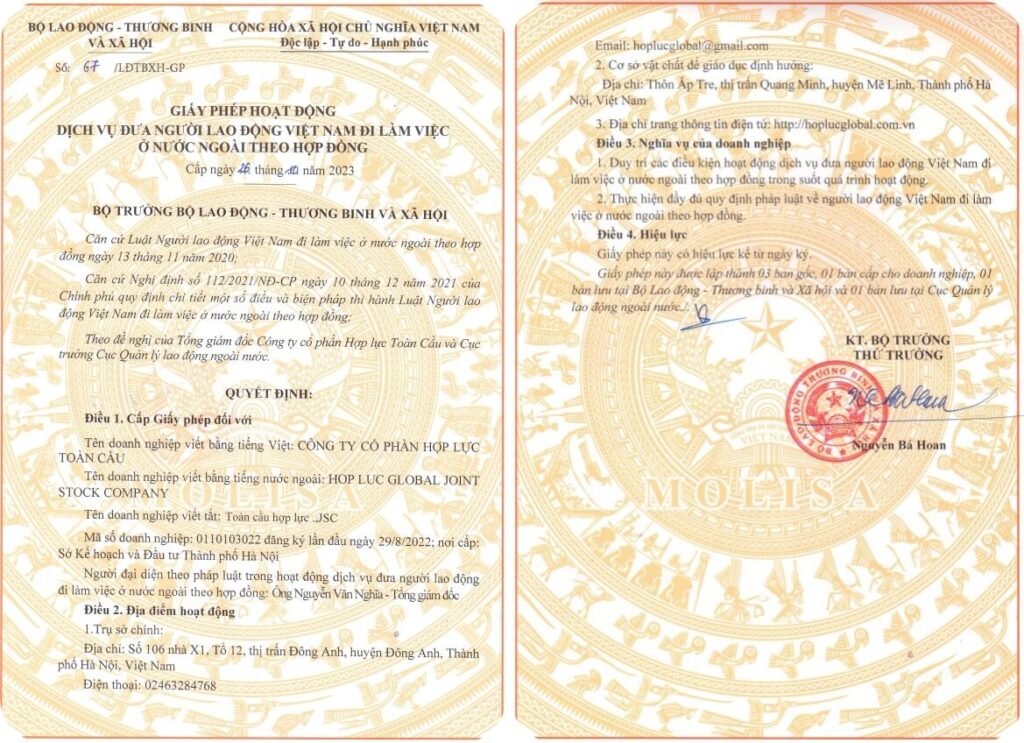
An approved manpower agency Vietnam must first obtain a license from the Ministry of Labour, Invalids and Social Affairs (MOLISA). This license confirms the agency is legally permitted to export labor, meets minimum capital requirements (5 billion VND), has qualified legal representatives, dedicated training facilities, and a clean compliance record. Without this baseline, no agency can legally deploy workers overseas. Always request the license number and verify it directly with MOLISA official registry.
International Compliance Standards for EU Hiring
A verified manpower provider Vietnam also aligns with EU expectations: bilingual employment contracts, zero-fee policies for workers (ILO fair recruitment principles), auditable documentation, and adherence to EVFTA Mode 4 provisions.
In practice, a certified manpower company Vietnam operates with full transparency, documented processes, and measurable compliance standards—giving employers confidence before, during, and after deployment.
Why a Certified Manpower Company Vietnam Matters for EU Employers
Working with a certified manpower company Vietnam is one of the most effective ways to protect your recruitment investment in cross-border hiring.
Choosing a certified partner directly reduces operational, legal, and financial risks that unverified agencies create.
Legal Risk Reduction and Audit Readiness
Non-compliance with EU labor laws and worker mobility regulations or bilateral agreements can result in fines, project shutdowns, and blacklisting from public tenders. A verified manpower provider Vietnam provides auditable documentation for every worker – contracts, visa approvals, training certificates – so you can demonstrate due diligence during any inspection. Without this, you carry the risk alone.
Workforce Quality and Reliability Assurance
An approved manpower agency Vietnam invests in structured recruitment and manpower services: practical trade tests, 180-240 hours of pre-departure training, and documented certification alignment with EN ISO or HACCP standards. The result: higher retention (90%+ after 12 months), fewer performance issues, and lower long‑term costs.
📘 Want the full picture before choosing a partner?
This article covers certification, but a complete Vietnam manpower agency evaluation requires a broader framework. Explore our full guide to understand legal structure, recruitment models, and risk control.
How to Verify a Certified Manpower Company Vietnam
Verification is straightforward. Use this checklist before engaging any certified manpower company Vietnam.
Key Documents and Certifications to Request
Ask every potential approved manpower agency Vietnam for:
- Copy of the valid MOLISA license (verify number and expiry)
- Sample employment contracts in both Vietnamese and your language
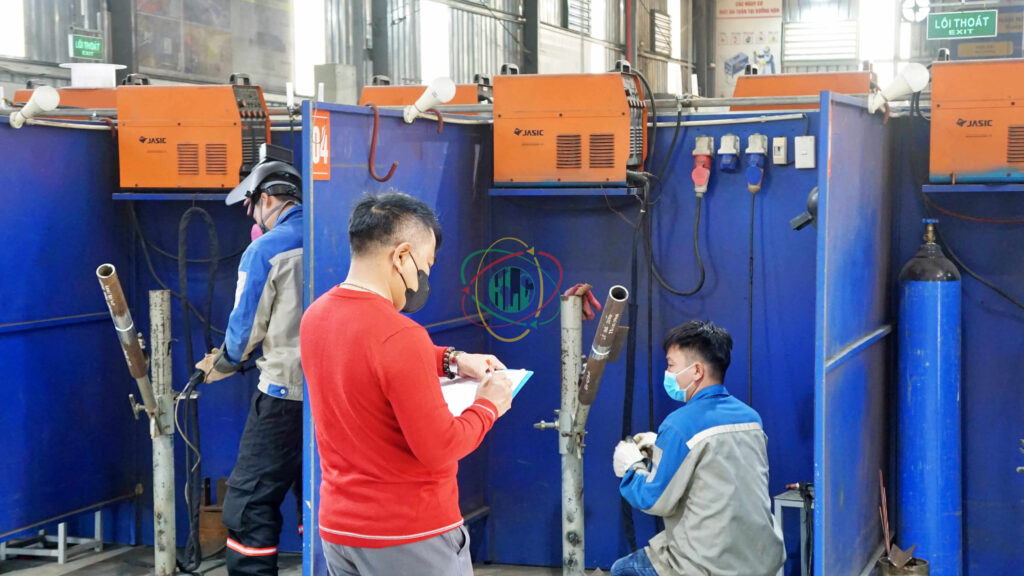
- Training curriculum and proof of training hours (e.g., photos of facilities, logbooks)
- Trade test results for recent deployments (weld coupons, electrical assessments)
- Client references from EU employers (preferably in your industry)
A transparent provider will provide these documents willingly. For a deeper evaluation framework, see our manpower agency checklist.
Red Flags When a Provider Is Not Fully Certified
Be cautious if you encounter any of these warning signs:
- Refusal to share the MOLISA license or unverifiable license number
- Unrealistic deployment timelines (“workers in 2 weeks”) that ignore visa and training requirements
- Unclear fee structures or reluctance to put a zero‑fee policy in writing
- Vague answers about training, sourcing, or aftercare processes
- No verifiable EU client references or case studies
A verified manpower provider Vietnam will never hide behind vague promises. If you see two or more red flags, consider the provider high‑risk.
Ultimately, verifying a certified manpower company Vietnam is not about paperwork alone—it is about ensuring long-term workforce stability and compliance.
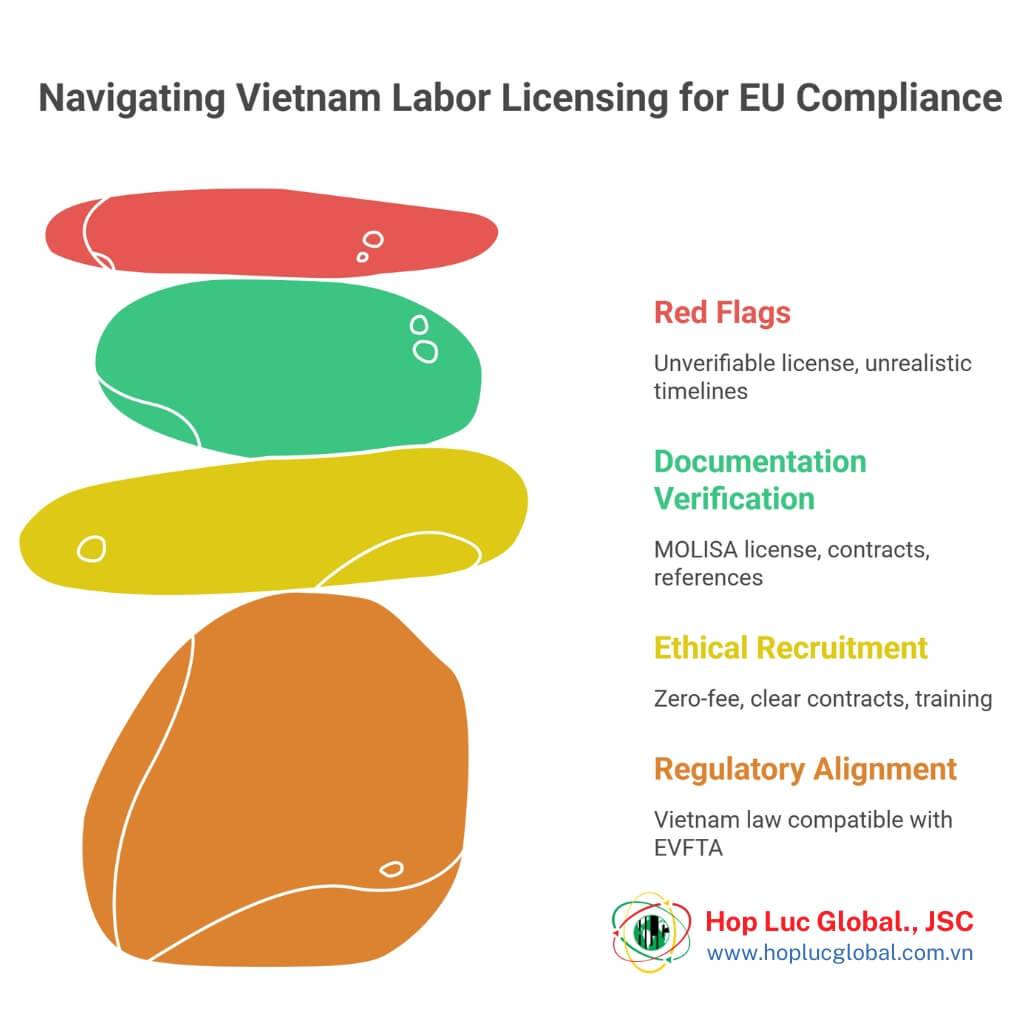
Before comparing outcomes, it is important to recognize that choosing a certified manpower company Vietnam fundamentally changes the risk profile of your entire recruitment strategy.
Certified Manpower Company Vietnam vs Non‑Certified Providers
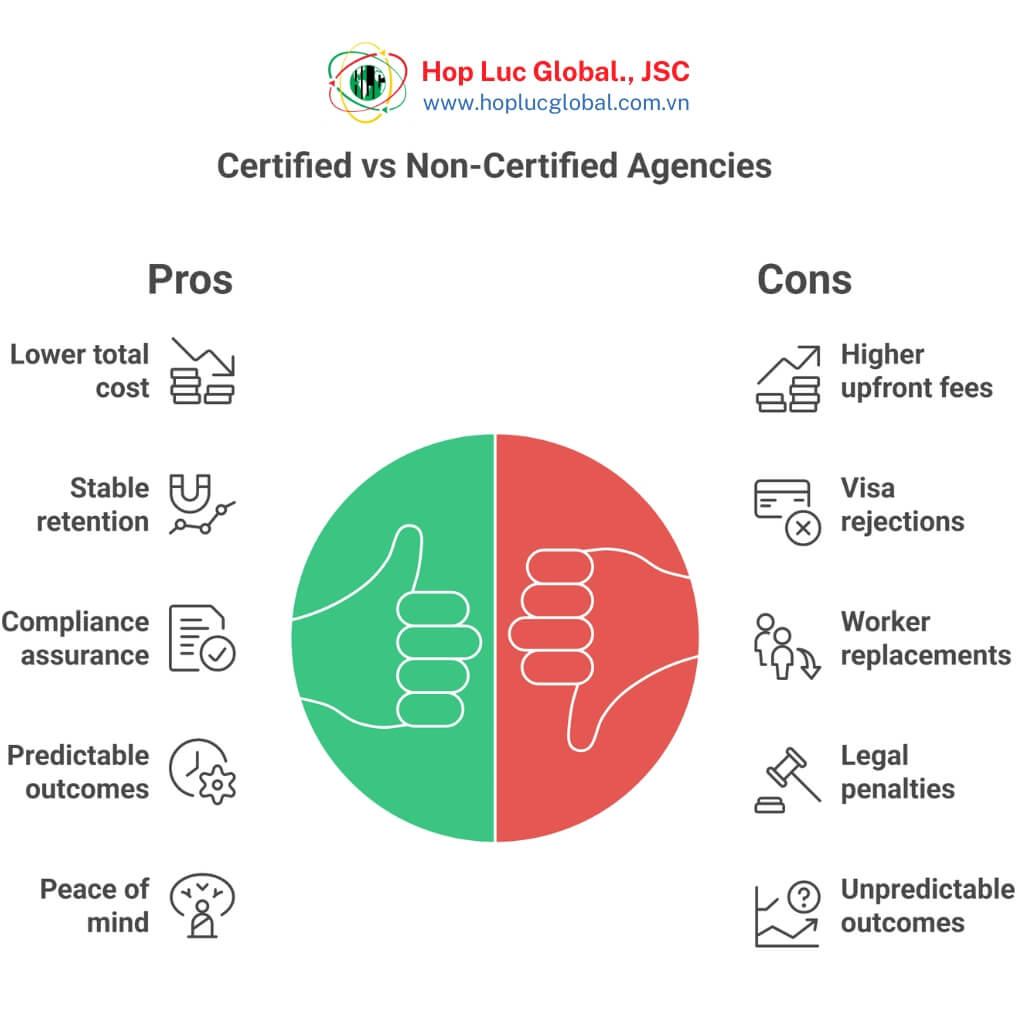
The differences between certified and uncertified agencies translate directly into business outcomes.
Cost vs Risk: The Hidden Trade‑Off
Non‑certified agencies may offer lower upfront fees, but hidden costs appear later: visa rejections (wasting time and money), mid‑contract worker replacements (retraining and downtime), and legal penalties for non‑compliance. An approved manpower agency Vietnam may have slightly higher service fees, but the total cost of ownership is consistently lower thanks to stable retention and compliant processes.
Case Example: Certified vs Unverified Recruitment Outcome
Scenario A – Certified Partner: A German automotive supplier works with a certified agency. Deployment takes 35 days. All workers hold EN ISO welding certificates. Retention is 94% after 18 months. No compliance issues. The supplier renews the contract and expands headcount.
Scenario B – Unverified Agency: Another manufacturer chooses a low‑cost, unlicensed broker. Half the visa applications are rejected. Delays cost the project €40,000 in lost production. Three workers leave within three months due to unclear contracts. The manufacturer ends up paying for a second recruitment cycle.
The difference is not just cost – it is predictability and peace of mind. For real feedback from other EU employers, review our real EU employer reviews of Vietnam manpower agencies.
How Hop Luc Global Operates as a Certified Manpower Company Vietnam
As a certified manpower company Vietnam, Hop Luc Global focuses on compliance-first recruitment, ensuring every deployment meets both Vietnamese legal requirements and EU employer expectations.
Hop Luc Global JSC exemplifies what a certified manpower company Vietnam should be – fully licensed, transparent, and EU‑focused.
Licensing, Training, and Compliance Systems
We hold MOLISA License No. 67/LDTBXH-GP, meet all capital and facility requirements, and operate a dedicated High‑Tech Training Center in Hanoi. Our pre‑departure programs exceed 180 hours, covering EN ISO welding, HACCP for food processing, workplace English, and EU safety protocols. We also adhere to ILO fair recruitment principles, including a zero‑fee policy for workers.
Transparent Recruitment and EU‑Focused Support
Every client receives auditable documentation: license copies, training records, visa tracking, and bilingual contracts. We provide 30/60/90‑day aftercare check‑ins and a replacement SLA. Our compliance‑first approach has earned long‑term partnerships with employers across Germany, Poland, Croatia, and Hungary.
For a complete understanding of our hiring framework, see our Vietnam manpower agency guide.
When Should You Prioritize a Certified Manpower Company Vietnam?
Certification is not always mandatory, but certain situations demand it.
High‑Risk Industries and Large‑Scale Hiring
Sectors such as food processing, healthcare, and aerospace manufacturing carry higher compliance and safety standards. An approved manpower agency Vietnam provides the documentation and quality assurance that auditors require. Large‑scale hiring (20+ workers) also magnifies any compliance failure – a certified partner reduces that risk.
Long‑Term Workforce Planning in the EU
If you plan multi-year contracts or recurring seasonal hiring, a verified manpower provider Vietnam ensures stable workforce supply from Vietnam, predictable deployment cycles, and a lower total cost of ownership. Uncertified agencies may cause repeated disruptions that harm productivity and client relationships.
🤝 Still evaluating if a certified partner is the right fit?
Every EU project has different compliance requirements, timelines, and workforce expectations. If you want to clarify whether a certified manpower company Vietnam aligns with your hiring goals, it helps to review your specific case before making a decision.
You can also explore our broader framework here: Vietnam manpower agency guide
Or reach out when you’re ready:
📧 contact@hoplucglobal.com 🌐 https://hoplucglobal.com.vn/
Frequently Asked Questions
What is a certified manpower company in Vietnam?
A certified manpower company holds a valid MOLISA license, meets financial and operational criteria, and aligns with EU compliance standards including ILO fair recruitment principles and EVFTA provisions.
How can I verify a manpower agency in Vietnam?
Request the MOLISA license number, review sample contracts and training records, check client references, and ensure a written zero‑fee policy. Cross‑reference with official MOLISA registry if possible.
Is it risky to work with a non‑certified manpower provider?
Yes. Risks include visa rejections, legal penalties, worker disputes, project delays, and reputational damage. Non‑certified providers often lack auditable processes and worker protections.
Do EU employers require certified recruitment partners?
While not every EU law explicitly mandates certification, supply chain due diligence directives (e.g., CSDDD) and bilateral agreements require employers to verify legal compliance. Using a certified partner is the safest way to meet those obligations.
What certifications should Vietnamese workers have?
Common certifications include EN ISO 9606‑1 for welders, HACCP for food processing, EU safety training (Directive 89/391/EEC), and trade‑specific credentials aligned with your project requirements.
Choosing a certified manpower company Vietnam is the single most important due diligence step you can take. It protects your timeline, budget, and reputation. By verifying licenses, demanding transparency, and partnering with compliant agencies, you build a workforce pipeline that is stable, ethical, and fully aligned with Vietnam labor licensing regulations and cross-border labor laws.