Offshore Staffing Vietnam for EU Employers and Recruitment Partners
Across Europe, many employers are no longer treating workforce shortages as a short-term hiring issue. For companies in manufacturing, construction, logistics, food processing, agriculture, hospitality, and shipbuilding, the challenge is often deeper: how to build a stable labor pipeline when local recruitment cannot fill every role.
This is where offshore staffing Vietnam becomes relevant. It gives EU employers and recruitment partners a structured way to explore Vietnamese workers as part of a wider workforce planning strategy.
However, offshore staffing is not simply about receiving CVs from another country. It requires clear job requirements, realistic planning, candidate screening, documentation awareness, and preparation before workers travel. A reliable Vietnam-based manpower supply partner should help employers understand each step before recruitment begins. A well-planned offshore staffing Vietnam project gives employers clearer visibility before they commit to sourcing, screening, and documentation preparation.

Why Offshore Staffing Vietnam Is Becoming Relevant for EU Employers
Many European companies are facing pressure in practical, labor-intensive industries. Factories need machine operators and production workers. Construction firms need skilled trades. Logistics companies need warehouse support. Hospitality and agriculture employers often need seasonal or operational workers at the right time.
When these roles remain unfilled, the business impact is real. Production slows down. Projects are delayed. Existing teams carry more pressure. Overtime increases. In some cases, employers may lose business opportunities because they cannot secure enough workers.
For many companies, offshore staffing Vietnam becomes relevant when workforce gaps start affecting delivery, productivity, or seasonal planning.
For this reason, overseas workforce planning is becoming more important. Employers are not only asking, “Where can we find workers?” They are also asking, “How can we build a more predictable recruitment channel?”
Offshore staffing Vietnam can support that discussion when handled properly. Vietnam offers a workforce source for skilled, semi-skilled, and general roles, but successful hiring depends on process quality. Employers need to define roles clearly, confirm documentation responsibilities, and work with a partner that communicates realistically.
Offshore staffing should never be treated as a shortcut. It works best when both sides understand that recruitment, screening, documentation, and worker preparation all need time and coordination.
What Offshore Staffing Vietnam Means in a B2B Recruitment Context
In a B2B recruitment context, offshore staffing Vietnam refers to working with a Vietnam-based manpower or recruitment partner to source, screen, prepare, and coordinate Vietnamese workers for overseas employment opportunities.
For EU employers and recruitment agencies, this process should go far beyond simple CV forwarding.
A professional manpower supply partner may support:
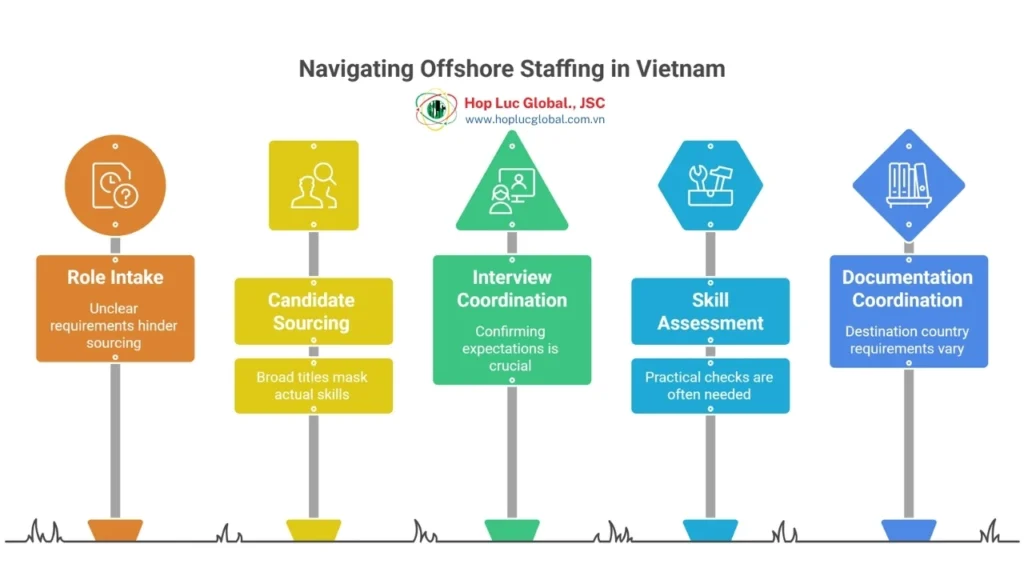
- Role intake and workforce requirement review: clarifying job titles, worker quantity, job descriptions, salary range, location, and target start date.
- Candidate sourcing from Vietnam: identifying potential workers based on the agreed role criteria.
- Profile screening and shortlisting: reviewing experience, suitability, and basic documentation readiness.
- Interview coordination: arranging employer interviews or candidate review sessions.
- Skill assessment or trade testing: supporting practical checks where relevant to the role.
- Recruitment documentation support: helping candidates prepare required documents while coordinating with employer-side requirements.
- Pre-departure orientation: supporting worker readiness before travel where applicable.
In practice, offshore staffing Vietnam works best when the employer treats the process as a structured hiring project, not a last-minute candidate search.
The goal is to create a structured recruitment workflow. Employers need to understand what happens at each stage, what information they must provide, and what requirements must be checked before the project moves forward.
A strong offshore staffing partner should also be clear about limits. Work permits, visas, and immigration decisions are made by relevant authorities. A staffing partner can support coordination and documentation preparation, but it should not promise legal outcomes.
When Offshore Staffing Vietnam Makes Strategic Sense
Offshore staffing from Vietnam can make sense when an employer has a clear workforce need and local recruitment is not producing enough suitable candidates.
For EU employers, offshore staffing Vietnam is most useful when the need is clear, repeatable, and connected to operational planning.
Common situations include:
- A factory needs production workers, machine operators, or assembly staff.
- A construction company needs workers for ongoing or upcoming projects.
- A logistics company needs warehouse staff before a peak season.
- A food processing company needs stable line workers.
- A shipbuilding or metalwork company needs welders, fitters, or technical workers.
- A recruitment agency in Europe needs a reliable Vietnam-based manpower partner.
The process works best when the employer is ready to share practical information. A vague request such as “we need workers” is difficult to source effectively. A clear request such as “we need machine operators with factory experience, basic English, accommodation support, and a target start period” gives the recruitment team a stronger foundation.
Employers should prepare job descriptions, worker quantity, salary range or employment conditions, location, accommodation plan if applicable, language expectations, required skills, and expected start date.
Compliance should also be considered early. Each destination country has its own employment, work permit, and documentation requirements. These requirements may vary by role, employer structure, and current policy.
Planning to recruit workers from Vietnam?
Share your role list and target start date with Hop Luc Global JSC to review whether Vietnam is suitable for your workforce plan.
Suitable Worker Categories and Industries
For offshore staffing Vietnam, EU employers and recruitment partners may consider Vietnamese workers for a range of practical roles. Suitability depends on the job requirements, destination country, certification expectations, and candidate availability at the time of recruitment.
| Industry | Example Roles | Planning Notes |
|---|---|---|
| Construction | General workers, carpenters, steel fixers, scaffolders | Clarify site conditions, safety requirements, tools, accommodation, and language needs. |
| Welding and metalwork | Welders, fitters, metal fabricators | Confirm welding method, trade test expectations, project standards, and certificate requirements. |
| Manufacturing | Machine operators, CNC operators, assembly workers, production workers | Provide machine type, shift pattern, quality control expectations, and experience level. |
| Logistics and warehousing | Warehouse workers, order pickers, forklift-related roles | Confirm lifting requirements, shift system, license recognition, and work environment. |
| Food processing | Line workers, packers, hygiene support roles | Clarify hygiene requirements, temperature conditions, and seasonal demand. |
| Agriculture | Greenhouse workers, harvest workers, farm support staff | Plan early for seasonal peaks, accommodation, transport, and health requirements. |
| Hospitality | Housekeeping, kitchen support, cleaning, service support | Clarify language expectations, customer-facing tasks, working hours, and accommodation. |
| Shipbuilding | Welders, fitters, painters, technical assistants | Confirm technical standards, safety rules, and project duration. |
The key is skill matching. Job titles alone are not enough. Employers should describe the actual tasks, tools, working environment, and performance expectations. This helps the recruitment team screen more accurately and reduces misunderstanding before selection.
Offshore Staffing Vietnam Process for EU Employers
A reliable offshore staffing Vietnam process should be easy for employers to understand. Hop Luc Global JSC approaches the discussion through a practical workflow that helps both direct employers and recruitment agencies clarify requirements before recruitment begins.
Role intake and requirement review
The employer or recruitment partner shares the role list, number of workers, job descriptions, target country, worksite location, salary range or employment terms, working hours, accommodation details if applicable, and expected start date.
At this stage, Hop Luc Global JSC reviews whether the roles are suitable for Vietnam-based sourcing and what additional information may be required.
Candidate sourcing and screening
After the role requirements are clear, candidate sourcing can begin. Screening may include work experience review, role suitability, interview readiness, basic documentation readiness, and willingness to work under the stated conditions.
For technical roles, sourcing should focus on actual skills and job tasks rather than broad job titles.
Interview coordination and selection
Employers may review candidate profiles, conduct video interviews, request skill summaries, or arrange practical assessments where relevant. This step helps both sides confirm expectations before moving into documentation preparation.
Skill assessment where applicable
For welders, CNC operators, machine operators, construction workers, and other skilled roles, trade testing or practical skill checks may be useful. The exact assessment method should be confirmed with the operations team before recruitment starts.
Documentation coordination and worker preparation
Once candidates are selected, documentation coordination can begin according to destination-country requirements. Worker preparation may include orientation on workplace discipline, safety expectations, communication basics, travel readiness, and employer-specific expectations.
For a broader view of the recruitment structure, employers can also review our guide on staffing agency for EU hiring.
Compliance and Documentation Considerations
Compliance is one of the most important parts of offshore staffing Vietnam, especially when employers are planning cross-border recruitment. Employers should treat documentation and legal requirements as a core part of the hiring plan, not as a final administrative step.
Requirements may differ by country, employer structure, job role, contract type, worker category, and current immigration or labor policy. For this reason, employers should verify the latest destination-country requirements with official authorities, local advisers, or employer-side legal representatives before making final commitments.
Typical documentation areas may include:
- Candidate identification documents.
- Employment contract or offer documents.
- Medical examination documents where required.
- Police clearance or background documents where required.
- Skill records or certificates where applicable.
- Employer-side work permit or sponsorship documents.
- Accommodation or onboarding information where required.
A responsible manpower supply partner can help organize documentation preparation and communication. However, work permit and visa approvals are decisions made by relevant authorities. No agency should guarantee approval, fixed timelines, or legal outcomes.
For official labor mobility and employment information in Europe, employers can consult the European Labour Authority. This external source should be used as a reference point, while country-specific rules should still be verified locally.
Want to review the recruitment workflow first?
Send your headcount plan and target country. Hop Luc Global JSC can help outline the sourcing, screening, and documentation coordination steps to review.
How to Choose a Partner for Offshore Staffing Vietnam
Choosing the right partner for offshore staffing Vietnam is a business decision. Employers and recruitment agencies should evaluate more than candidate numbers.
A reliable partner should be able to explain:
- How role requirements are reviewed.
- How candidates are sourced.
- How screening is handled.
- How interviews are coordinated.
- Whether trade testing can be arranged for skilled roles.
- How documentation preparation is supported.
- What the employer must prepare.
- What the agency can and cannot guarantee.
- How worker expectations are communicated before departure.
Process transparency is essential. A partner that promises speed without explaining the workflow may create risk later. In international recruitment, trust is built through clear communication, realistic planning, and compliance-aware execution.
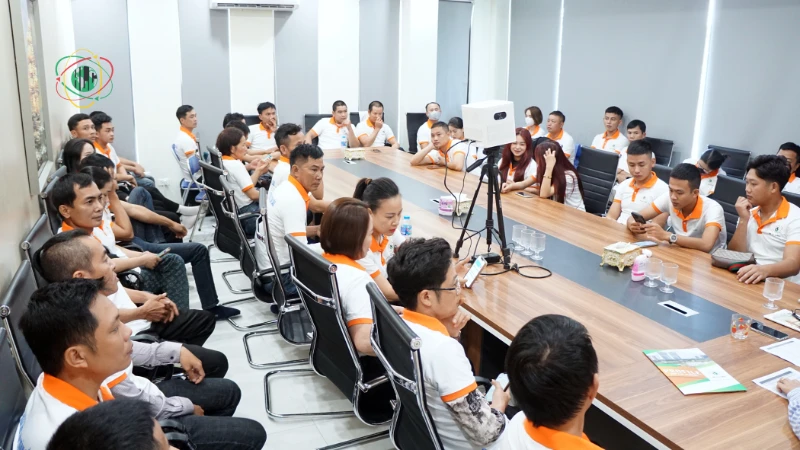
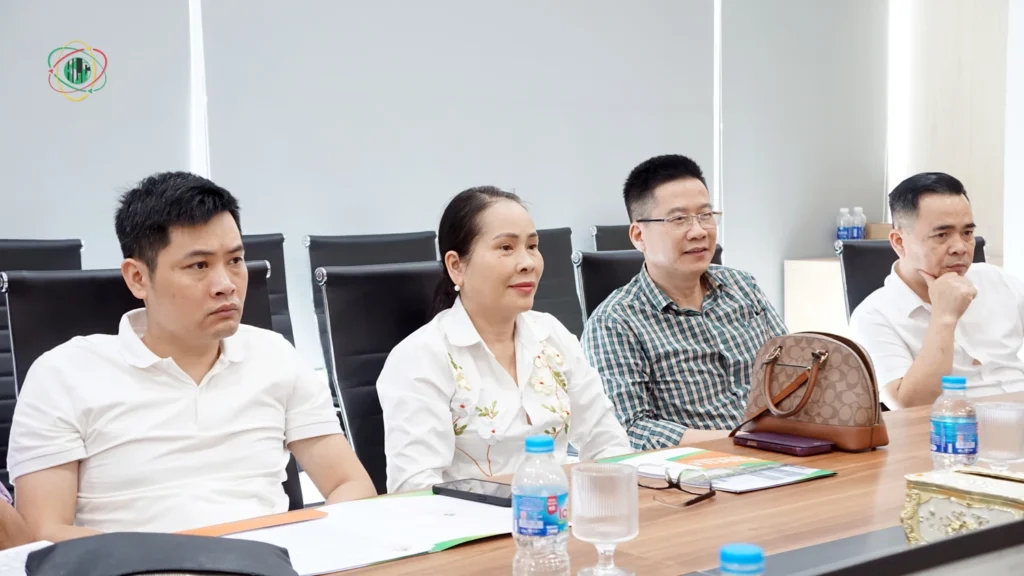
Employers should also look for operational proof where available. Real photos of training, orientation, candidate interviews, or skills assessment can help demonstrate that the agency has a practical recruitment process, not just a website presentation.
Work with Hop Luc Global JSC
Hop Luc Global JSC supports offshore staffing Vietnam discussions for EU employers and recruitment partners through Vietnam manpower supply, candidate sourcing, screening coordination, worker preparation, and documentation-aware recruitment planning.
Our role is to help employers turn workforce demand into a practical recruitment plan. That starts with reviewing the role list, target country, worker quantity, required skills, and expected start date. From there, Hop Luc Global JSC can discuss sourcing options, candidate preparation, interview coordination, skill assessment where applicable, and documentation steps.
For recruitment agencies in Europe, Hop Luc Global JSC can act as a Vietnam-based manpower supply partner for selected worker categories and markets, subject to role suitability and operational confirmation.
The most productive first step is simple: share your workforce requirement clearly.
Request a sourcing roadmap
Share your role list, required worker quantity, target country, and expected start date. Hop Luc Global JSC can review your workforce plan and suggest a practical sourcing roadmap from Vietnam.
Email: contact@hoplucglobal.com
Phone: (+84) 24 6328 4768 | (+84) 983 688 060
Website: www.hoplucglobal.com.vn
Frequently Asked Questions
What is offshore staffing Vietnam?
Offshore staffing Vietnam refers to working with a Vietnam-based recruitment or manpower supply partner to source, screen, prepare, and coordinate Vietnamese workers for overseas employment opportunities.
When should an employer consider offshore staffing Vietnam?
An employer may consider offshore staffing Vietnam when local recruitment cannot fill practical roles, the workforce requirement is clear, and the company is ready to prepare job details, documentation, and a realistic hiring plan.
Which industries can use Vietnam offshore recruitment?
EU employers may consider Vietnam offshore recruitment for construction, manufacturing, welding, logistics, food processing, agriculture, hospitality, and shipbuilding roles. Suitability depends on job requirements, destination country, and candidate availability.
Can offshore staffing Vietnam guarantee worker deployment?
No. A staffing partner can support sourcing, screening, documentation preparation, and worker coordination, but work permit and visa outcomes are decided by relevant authorities.
What should EU employers prepare before contacting Hop Luc Global JSC?
Employers should prepare job titles, worker quantity, job descriptions, salary range or employment terms, location, target country, accommodation details if applicable, required skills, language expectations, and expected start date.
How are Vietnamese workers screened?
Screening may include profile review, work experience checks, interviews, basic documentation review, and skill assessment where relevant. The exact screening process depends on the role and employer requirements.
Can European recruitment agencies partner with Hop Luc Global JSC?
Yes. Recruitment agencies can share employer requirements, target market, role list, worker quantity, and expected hiring schedule. Hop Luc Global JSC can review the requirement and discuss a practical partnership approach.