
Introduction: The Real Cost of the European Labor Shortage
Across Europe, manufacturers, construction firms, and agricultural enterprises face a hard reality: local talent pools are shrinking. The persistent EU labor shortage puts pressure on employers as production lines and project timelines hang in the balance. For current evidence on European labour demand, employers can review Eurostat job vacancy statistics. For HR Directors and Plant Managers, staffing deficits can create operational pressure.
For HR Directors and Plant Managers, this is a structural threat to operational stability. Faced with severe staffing deficits, many turn to low-cost skilled labor in vietnam as a strategic alternative. Building a reliable Vietnam skilled labour pipeline requires looking beyond immediate wage comparisons. Smart decision-makers understand that sourcing built purely on price misses the point.
Partnering with a licensed manpower supplier like Hop Luc Global unlocks productivity, compliance, and long-term value that local temporary hires cannot match. Stable European operations demand a workforce designed for retention, not just recruitment.
Rising Operational Pressures on EU Employers
European industries suffer critical skills gaps in welding, machining, and heavy equipment operation. Persistently high vacancy rates force companies to inflate hourly rates to attract a shrinking local talent pool. Rising domestic labor costs squeeze margins without corresponding output gains. When a skilled position stays unfilled, the impact cascades through production delays, overtime premiums, and missed deadlines. A structured sourcing model delivering qualified personnel at predictable cost has become essential for industrial planning and margin protection.
Moving Beyond Short-Term Staffing Fixes
Temporary local hires create a revolving door of underqualified candidates and recurring recruitment fees. Constant re-advertising, re-interviewing, and re-training erodes any initial savings. Vietnamese manpower supply offers a pipeline of pre-vetted, technically trained workers who commit to contract terms. For employers accustomed to high churn, low-cost skilled labor in Vietnam can be evaluated as part of a planned international workforce model rather than as a short-term staffing fix. This approach helps employers compare recruitment cost with workforce stability and operational requirements.
Defining Low-Cost Skilled Labor in Vietnam: Beyond the Hourly Wage
Labeling Vietnamese talent as cheap misreads the value proposition. The advantage of low-cost skilled labor in vietnam lies in a structural cost differential driven by Vietnam’s lower cost of living, not lower capability. Employers access technically proficient welders, fabricators, and machine operators at a competitive price. The key distinction is the shift from price-only thinking to cost-effectiveness. A skilled worker who completes complex tasks with minimal rework and fulfills an entire contract delivers drastically lower per-unit production cost than a lower-wage hire generating scrap, downtime, or mid-project departures.
Cost-Effectiveness vs. Low-Cost Skilled Labor
Cost-effectiveness is output reliability, not just a payslip number. Skilled workers from Vietnam consistently demonstrate high technical precision and workplace discipline, reducing quality-control rejections and machine idle time. When employers calculate total labor spend against stable, repeatable output, the competitive wage structure translates into significant operational efficiency.
For European plant managers, predictable workforce planning can make production scheduling easier when worker capability, onboarding requirements, and contract conditions are assessed before recruitment begins.
Vocational Training and Technical Skills in Vietnam
Vietnam’s vocational system emphasizes practical, workshop-based training aligned with manufacturing and fabrication requirements. Students accumulate hands-on experience in arc welding, MIG/MAG processes, precision machining, and technical drawing. The methodology focuses on repeatable skill mastery, producing workers who adapt quickly to standardized European factory procedures. Employers onboard operators who already understand industrial workflows and safety protocols, drastically shortening ramp-up time.
For EU employers, low-cost skilled labor in Vietnam should therefore be assessed against actual trade skills, practical training, role requirements, and expected workplace performance rather than hourly wage alone.
Productivity and Retention: The True Value of Vietnamese Workers
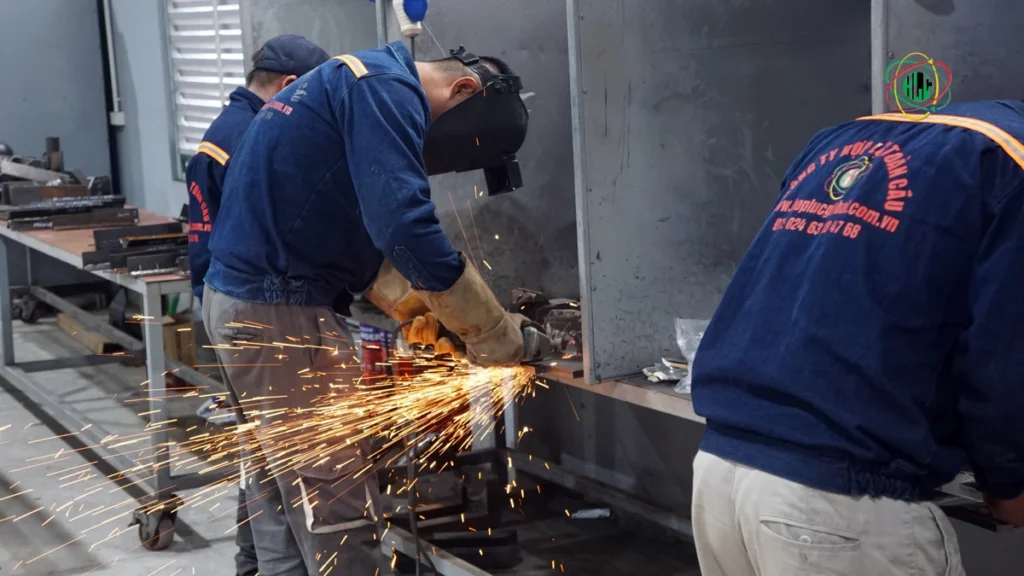
European production demands consistency; high turnover among local hires disrupts team cohesion and delivery schedules. Vietnamese workers bring productivity and contract commitment that addresses this directly. The value lies in reducing hidden costs of rework, absenteeism, and early termination. Workforce productivity is reinforced by cultural diligence, respect for hierarchy, and methodical execution. For a Plant Manager running a just-in-time line, a reliable operator performing tasks to specification is far more valuable than a marginally cheaper but unreliable alternative.
For employers comparing workforce options, low-cost skilled labor in Vietnam becomes commercially relevant when productivity, contract stability, onboarding effort, and replacement risk are considered together.
Strong Work Ethic and Adaptability
European employers note the strong discipline and rapid skill adaptation of Vietnamese technical workers. Once familiarized with site-specific machinery and quality standards, they apply consistent focus throughout shifts. Their respect for safety protocols aligns with rigorous OHS cultures in Northern and Central European manufacturing. Vietnamese personnel absorb process improvements quickly, proving highly effective in continuous improvement environments while reducing supervisory burden.
Contract Stability and Workforce Continuity
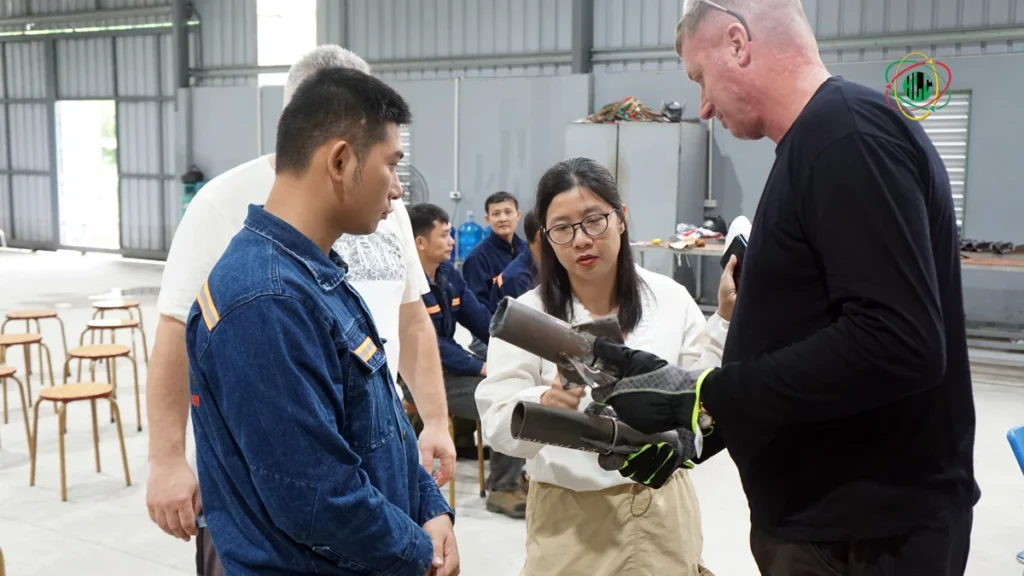
Contract stability is an important workforce metric for European employers. When workers remain in their assigned roles, employers can reduce the need for repeated recruitment, onboarding, and skills training. Actual retention depends on the worker, employer, contract conditions, workplace environment, and destination-country requirements, so employers should assess retention as part of a broader workforce planning process.
Total Cost of Ownership (TCO) in International Recruitment
Smart B2B buyers evaluate workforce solutions through Total Cost of Ownership, not a single line item. An agency invoice is only one element. TCO captures visa administration, airfare, onboarding, and the disruption cost of unfilled or underperforming roles. For this reason, low-cost skilled labor in Vietnam should be evaluated through the full employment and operational cost structure rather than the advertised wage alone. Weighing idle machinery, missed milestones, and constant re-recruitment against a stable workforce gives employers a more practical basis for workforce planning.
Calculating the Direct and Indirect Costs
Direct costs like recruitment fees, documentation, and travel are straightforward to forecast. Indirect expenses are more dangerous: production stoppages, overtime to cover missing shifts, and quality losses from inexperienced replacements. A reliable partner manages documentation and vetting rigorously, preventing hidden costs from delayed starts or mismatched placements. Consolidating sourcing, testing, and mobilization under one accountable partner transforms a fragmented cost structure into a predictable per-candidate investment.
Mitigating the Financial Impact of High Turnover
Replacing a skilled technician can cost six to twelve months of gross salary factoring in advertising, markups, lost output, and ramp-up time. For a team of welders or operators, compounding churn is financially devastating. Personnel with documented contract fulfillment records directly attack this cost center. Transitioning from high temporary staff turnover to a stable international cohort frees budget for process improvement, tooling upgrades, and strategic expansion.
How Hop Luc Global Simplifies Sourcing Skilled Labor in Vietnam
International recruitment without a local expert introduces delays, compliance risk, and quality uncertainty. Hop Luc Global operates as an end-to-end partner, eliminating fragmentation that slows European hiring. Our methodology bridges the gap between a European factory floor and a Vietnamese vocational workshop, ensuring every candidate meets the role’s technical and physical demands. From profiling to departure readiness, we reduce administrative load so HR teams focus on production planning, not recruitment logistics.
Compliance and Legal Licensing
Hop Luc Global Joint Stock Company operates under License 67/LĐTBXH-GP, issued by the Vietnamese authorities on October 26, 2023. Employers conducting partner due diligence can also review official information from the Vietnam Department of Overseas Labour (DOLAB), which publishes information relating to licensed overseas manpower service enterprises. Destination-country requirements remain subject to the relevant authorities in each market.
A Structured Recruitment Pathway and Vetting Process
Quality control spans candidate selection through on-site integration. Hop Luc Global conducts practical trade testing at verified facilities, evaluating each candidate’s ability to perform the specific welding, machining, or assembly tasks required. Comprehensive background verification and medical screening confirm fitness for industrial assignments. Prior to departure, every worker undergoes structured orientation covering safety expectations, cultural adaptation, and European industrial behavioral norms. This preparation reduces integration time and supports early-stage productivity.

Conclusion: Building a Sustainable Workforce Strategy
European competitiveness relies on consistently staffing factories, construction sites, and processing plants. Low-cost skilled labor in Vietnam can form one component of a broader workforce strategy when employers evaluate technical capability, compliance requirements, retention, and total cost together. Viewing Vietnamese talent through immediate savings alone neglects the deeper gain: a resilient workforce reducing operational risk.
Frequently Asked Questions
What makes skilled labor from Vietnam cost-effective for European employers?
Vietnam’s lower cost of living enables competitive wages without sacrificing quality. Combined with high productivity and consistent output, this creates a total labor cost advantage beyond hourly rate comparison.
Is Hop Luc Global fully licensed to supply manpower to Europe?
Yes. Hop Luc Global Joint Stock Company holds License 67/LĐTBXH-GP, issued by the Ministry of Labour, Invalids and Social Affairs on October 26, 2023, authorizing overseas manpower supply operations.
How does Hop Luc Global verify the skills of Vietnamese workers?
We conduct practical trade testing at specialized centers, verify vocational qualifications, and perform background and medical checks to confirm each candidate’s ability to perform required industrial tasks.
What industries in Europe benefit most from Vietnamese manpower?
Manufacturing, construction, agriculture, and logistics gain the most value, particularly for roles requiring skilled welders, fabricators, CNC operators, mechanics, and assembly technicians.
How long does the recruitment and mobilization process typically take?
Timelines depend on destination-country visa processing and embassy scheduling. Hop Luc Global manages documentation efficiently to minimize delays, though final processing remains subject to official authority review.
How do Vietnamese workers adapt to European working environments?
Through structured pre-departure orientation covering workplace safety, cultural expectations, and basic communication skills. This supports smoother integration and faster on-site productivity.
Ready to Secure Reliable Talent?
Share your role list and target start date with Hop Luc Global to receive a structured manpower proposal. Our team ensures compliance at every stage and guides you through destination-country administrative procedures.
Email: contact@hoplucglobal.com | Phone: (+84)24.6328.4768
Website: https://hoplucglobal.com.vn/
Office: Lot 01, TT6 – 2B, Thi Cam Street, Xuan Phuong Ward, Hanoi, Vietnam